







Key findings in 60 seconds
- Automation was the word of the show. The harder question, automate what, exactly, came up far less often.
- Most organisations keep content in one system and audience data in another. Automating on top of that just makes the mess run faster.
- Order beats ambition: Acquire, then Activate, then Amplify. It is a budgeting argument as much as an architecture one.
- IBC drew 41,225 visitors, down around 6% and the second annual drop in a row — which is why so many stands now sell a dozen capabilities each.
- The surprise of the week was the MCP server: people wanted automation inside the tools they already use, not another system to learn.
There is no good reason for a software company to build a working sports bar at a broadcast trade show.
We built one anyway. The only sports bar at IBC 2026, four days in Hall 5 at the RAI Amsterdam, in the floor space most companies fill with demo pods.
It turned out to be the best research tool we have ever taken to Amsterdam.
In a scheduled meeting, people tell you about their roadmap. Give them a drink and a match on the screen behind them, and they tell you what is actually broken. Four days of that, and the same subject kept surfacing.
Everyone wanted to automate. Far fewer could say what.
Automation was the word of the show, where last year it was Gen Z and what was coming next. Every hall, every panel, every second stand, and our founders came back saying it was close to impossible to have a conversation that did not end up on AI.
One question came up far less often. Automate what, exactly?
For most of the organisations we spoke to, the honest answer was that the pieces are not ready for it yet. The content sits in one system, the audience data in another, and the two have never been introduced. Automating on top of that does not fix it. It makes the mess run faster.

And in the end, the fan feels the result. Hub Entertainment Research asked 3,733 US sports fans over the winter how hard it is to work out where to watch the sport they follow, and 87% found it at least somewhat frustrating. So by the time someone reaches your product, their patience is already spent.
Why order matters
Romy Suárez, our Head of Global Business Development, made this argument on a panel with MASV and Tuxera, and the week kept circling back to it. We build in three phases, and each one runs on the one before.
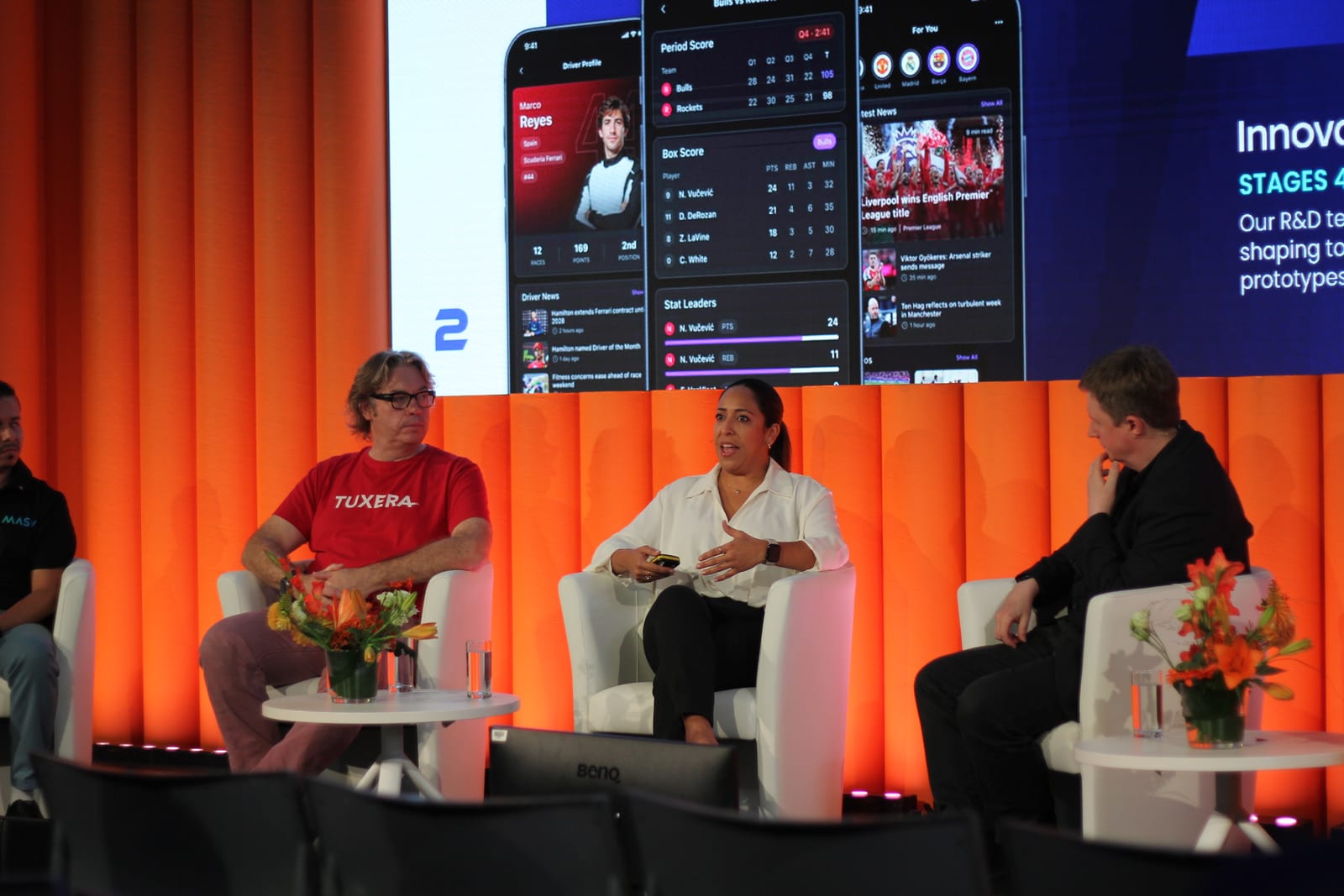
- Acquire is the foundation: getting the data, content and audiences an organisation already produces into one place it can use.
- Activate turns that into experiences people take part in rather than watch.
- Amplify connects the platforms and data so new revenue can sit on top.
Most of the organisations at the show are somewhere in the first phase, asking questions from the third.
It reads like a framework. In practice, though, it is a budgeting argument, because building in order lets an organisation fund one phase, learn from it, and fund the next, instead of signing off a connected fan ecosystem on day one.
The obvious objection is that this sounds slow while competitors ship AI features now. Fair enough. But over three years, the organisations that move fastest are usually the ones that spent their first months on the foundation and nothing else.
Why so many stands looked the same
IBC drew 41,225 visitors this year, down around 6% on last year and the second annual drop in a row. In a shrinking market, the way to make the numbers work is to sell more to each customer you already have, which takes a broader portfolio. The fast way to get one is to buy a company that already has the products: MediaKind closed its $145m purchase of Harmonic’s video business in June. The slow way is to build them and add one to the catalogue at a time, which is what most of the floor has been doing.

So everywhere you walked, the same stand was selling asset management, translation, anti-piracy, encoding, and an AI layer over the top. Carlo De Marchis gave the result a name after the show: fat portfolio syndrome.
When every company lists twelve capabilities, the buyer’s job becomes working out which one any of them is genuinely good at. That is slow going, and slower still when the help you need is with the foundational work nobody puts on a banner.
What people came to the stand for
So here is what we put on our screens instead. We said beforehand what we would be showing, and here is what people actually stopped for.
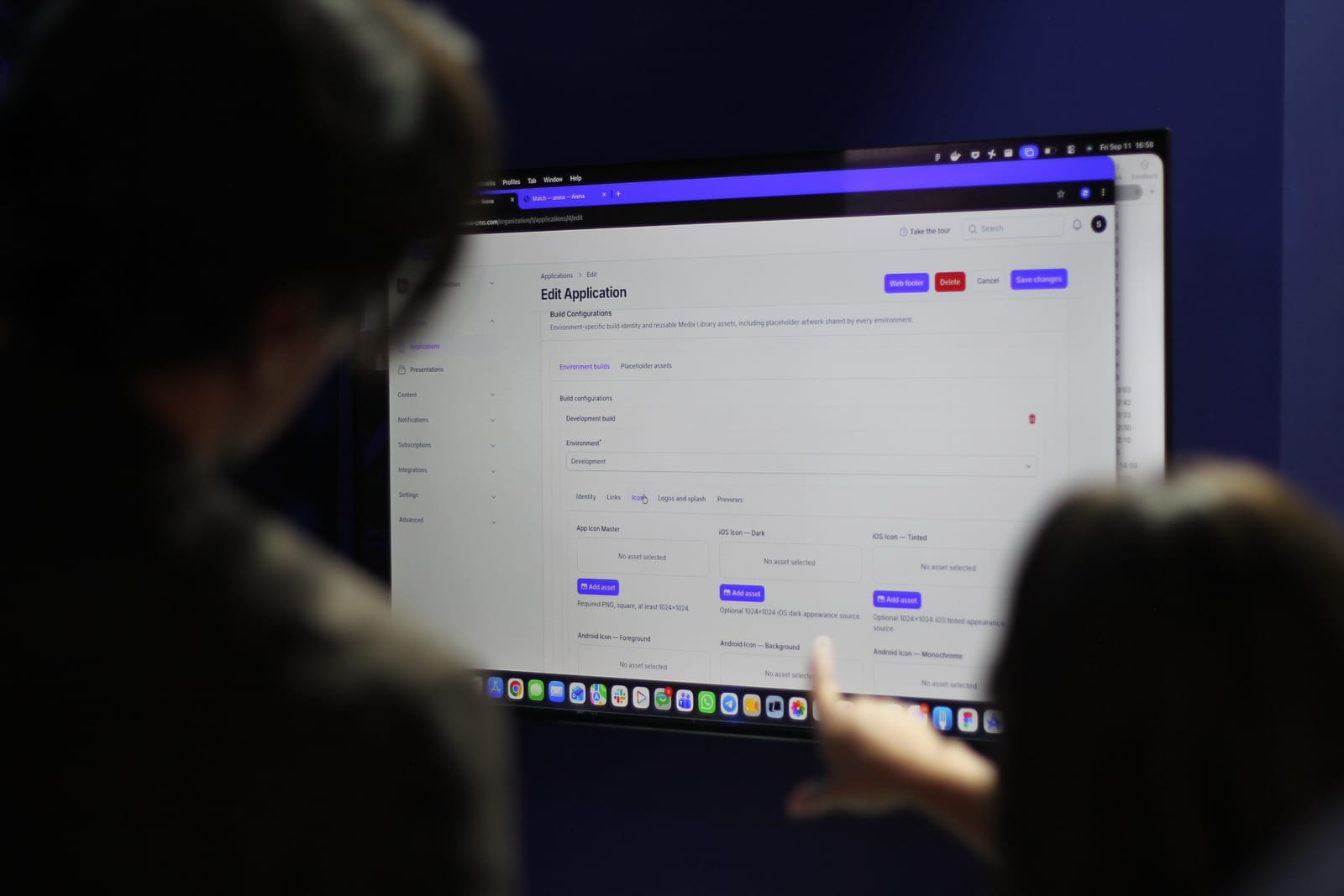
Arena drew the most attention, mostly for how quickly it gets an organisation to a running app and how easily a team can make it their own, building their own features on top of a foundation that already works.
Sports organisations took the modular design apart on the stand and kept reaching the same conclusion: from scratch, this would have taken them months.
The surprise was the MCP server, which both Arena and Velvet now have. An editor works with the platform from whatever AI assistant they already have open, pushing in content and, in Arena, managing screens, flows and languages and even creating whole applications, everything you would otherwise do by hand in the CMS. Four days of conversation about agentic workflows, and what people actually wanted was automation that works inside the tools they already use, rather than another system to learn.
Velvet drew its own steady crowd of broadcasters and streaming services, most of them running a mobile product and looking to reach the living-room screen next.
The Innovation Lab held people longest. Our team had built a concept for a major motorsport audience, reworking the television experience around intentional navigation and the kind of animation that makes a screen feel considered, and some of the sport’s biggest names stopped to work through it.
Until next September
IBC 2027 runs from 10 to 13 September at the RAI, the show’s 60th anniversary. Between now and then, most of the organisations we met will make a choice: add AI features to the platform they already run, or spend a year first getting its parts to work together.
One of those keeps paying off. The other you end up rebuilding anyway. If you want to know which, let’s have a chat.
Frequently asked questions
What were the main themes at IBC 2026?
Automation ran through almost every hall, and the harder question underneath it was what to automate. Most of the organisations we spoke to still keep content in one system and audience data in another, which has to be sorted out before automation is worth anything. The second theme was portfolio breadth: vendors selling a dozen capabilities each, which leaves buyers working out who is genuinely good at what.
How many people attended IBC 2026?
41,225 visitors from 170 countries, down from 43,858 in 2025. That is around 6% lower and the second annual drop in a row, although first-time exhibitors rose 36%.
When and where is IBC 2027?
IBC 2027 runs from 10 to 13 September 2027 at the RAI Amsterdam. It is the show's 60th anniversary.