






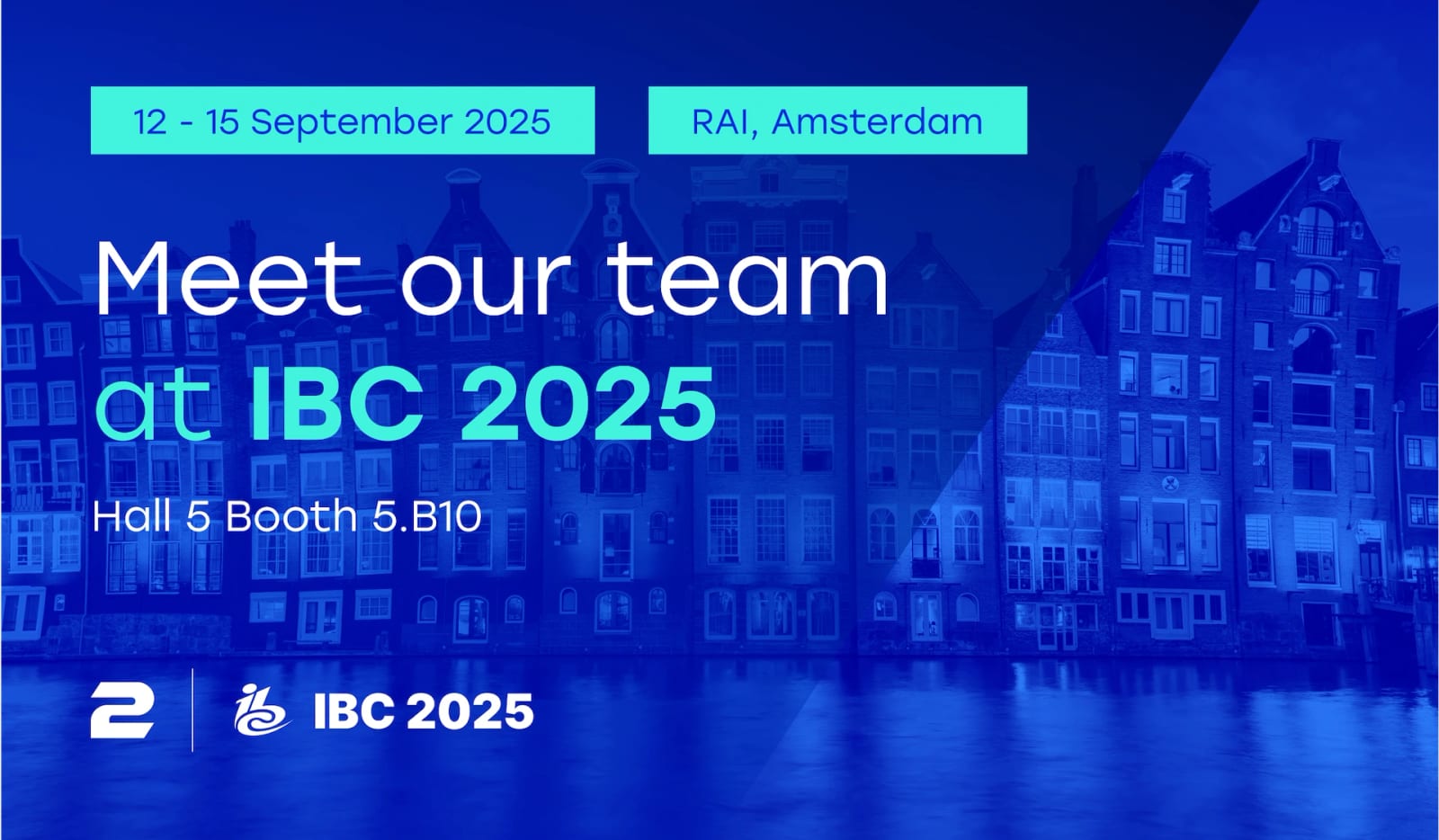
Amsterdam, 12-15 September 2025 — Another IBC wrapped up, and once again, the halls of the RAI were buzzing with conversations about the future of media and streaming. As the 2Coders team, we didn’t just attend — we came to share, learn, and connect.
After four intense days of panels, booths, and conversations, here are our takeaways — what’s trending, what’s promising, and where 2Coders can lead.
Big Themes We Heard Again & Again
Immersive, Participatory Experiences Over Passive Viewing
Multiple sessions emphasized that fans don’t just want to watch anymore — they want to be part of the experience. Real-time interactivity, alternate camera angles, VR/AR augmentations, and second-screen engagements are becoming baseline expectations.
Personalization + Continuity
With so much content, subscribers are fatigued. Platforms must deliver not just content, but the right content: tailored to preferences, viewing habits, and even mood.
We also saw “always-on” content models (beyond flagship events) gaining traction — including blurbs, behind-the-scenes content, micro-episodes, and community content.
AI & Automation as Enablers
A strong current through IBC was: AI isn’t just hype. From automating workflows (localization, dubbing, subtitling), to deploying generative tools for personalization, to using data to drive interactivity, efficiency, and a better fan experience.
Low Latency, Scalable Streaming Infrastructure
For live sports, especially, reducing lag, smooth delivery over varying network quality, and being scalable without breaking the bank were recurring concerns. New transport protocols, cloud-native pipelines, hybrid architecture, and smarter content delivery networks are in focus.
Gen Z / Next Gen Audience is Not One-Dimensional
Gen Z doesn’t behave like older viewers. Some key observations: They expect interactive, snackable content: shorter formats, social-first content, maybe even UGC (user-generated content) or creator collaborations.
Attention spans are fragmented: multitasking, switching between devices/screens, interacting (chat/social) while watching. Sustained loyalty is tied to constant value, not just event-based content.
Authenticity and adaptability matter: what feels real, immediate, and “owned” by the community wins, be it through storytelling, behind-the-scenes, fan contribution, or just letting fans shape the experience
New Monetization Models
It’s not enough to get eyeballs — platforms need to turn engagement into sustainable revenue. We saw experimentation with flexible subscriptions (pay-per-match, modular bundles), more creative ad formats, interactive commerce (merch, fandom tokens), and sponsorships embedded in immersive experiences.
Also, rights fragmentation forces creative thinking around how and where content is distributed.
Our Moment on Stage: “Designing for the Unreachable Fan”
One of our proudest moments at IBC2025 was presenting Designing for the Unreachable Fan: A New OTT Sports Playbook on the Content Everywhere stage. We explored how younger, hyper-connected audiences — often disengaged by traditional broadcast and even standard OTT — demand more.
They want choice, agency, and community. They want experiences that adapt to their preferences and let them engage in real time.
Our session wasn’t just about theory; it reflected the way we build at 2Coders — with design and tech aimed squarely at the next generation of fans.
At the Booth: Velvet & Our Innovation Lab
While the talk sparked ideas, our booth (5.B10) brought them to life. Velvet, our SDK-based front-end framework : We showed how Velvet enables platforms to build dynamic, adaptable apps at speed — without vendor lock-in, and ready to scale as needs evolve.
Our Innovation Lab prototypes : Alongside Velvet, we showcased prototypes from our own Innovation Lab — experimental concepts like the Adaptive Sports Universe and new ad experiences designed to make OTT more immersive, personal, and flexible. For many visitors, it was the first time seeing how these ideas could actually work in practice.
The feedback was clear: innovation isn’t just welcome, it’s expected. 👉 See more about our Innovation Lab here
What We Think 2Coders Should Focus On Going Forward
From our vantage, here are priority areas for us (and companies like ours) to double down on: Priority Why It Matters What We Can Do Fully interactive OTT sports experiences To satisfy Gen Z’s expectations and differentiate our offerings. Build UX that allows multiple camera angles, fan polls, social overlays, in-play statistics, maybe even allow user camera control or “choose your commentary”.
Snackable & hybrid content For retention + continuous engagement — content between events. Partner with content creators, produce behind-scenes, short highlight reels, explanation / “how it works” segments; ensure those are optimized for mobile / social.
Smart personalization To reduce churn, improve satisfaction. Use analytics / ML to suggest content, tailor timelines, allow users to control length / style of recap; personalize UI and features based on preferences.
Low latency & scalable infrastructure Streaming live sports demands tight latency; poor experience kills retention. Experiment with new transport protocols (e.g MoQ, QUIC-based streaming), cloud-native pipelines, edge computing.
Ensure fallback strategies and robust handling for low bandwidth. Design for Gen Z’s mindset Gen Z is already influencing defaults; ignoring them is risky.
In UX: faster load, minimal friction, social features integrated; in content: authenticity, community voice, user participation; in business: flexible pricing, perhaps ad-supported or hybrid tiers. Innovative monetization As rights get expensive & competition increases, revenue must come from multiple places.
Explore interactive ads, sponsorship integrations inside immersive experiences, merch/fandom commerce, micro-transactions, loyalty programs.
What Impressed Us / What We Think Are Early Signals
Multi-language / localization as standard : Several vendors showed tools for real-time dubbing and subtitling. Not “add-on”, but baked in.
That’s important to reach a global audience, especially younger fans, who are comfortable with consuming non-native content with translations. “Content everywhere” meaning deeper than devices : It’s not just about being on mobile, tablet, big screen — it’s about delivering content in formats that suit different user contexts: social media snippets, interactive stories, live vs VOD vs highlights.
The sessions on “How knowing who your customers are and where they are is reinventing the media landscape” stood out. Emerging standards and protocols : Media over QUIC (MoQ), new codecs or transport layers, low-latency pipelines are more than lab experiments; they’re showing up in vendor demos and conversations.
If we don’t plan for them, we risk being left behind. Viewer fatigue & platform consolidation : Everyone is talking about subscription overload, viewer churn, and fatigue.
The platforms that survive will be the ones that can offer clear value: ease of use, transparent pricing, minimal friction, meaningful engagement rather than just more content.
What We Might Be Underestimating (Risks & Challenges)
Bandwidth, connectivity, device fragmentation : Not all potential viewers (especially younger ones in emerging markets) have high-speed, stable internet or the very latest devices. Some immersive tech / VR, etc, will still lag in reach.
Cost vs Return : Some immersive and interactive features are expensive to build and maintain. If usage is niche, monetization may lag.
Need to choose wisely what to build in-house vs outsource or partner. Privacy / Data concerns : Personalization demands data.
Younger users are wary about data use, privacy, and tracking. Also, regulation (GDPR, etc) demands care.
Rights, licensing, fragmentation : With sports rights especially, getting global rights that allow cross-platform delivery, interactivity, etc., remains complex. It’s one thing to want interactive streams globally, another to have legal clearance.
Our Opinion
IBC2025 reinforced what we’ve believed for a while: the future of OTT is not “more content” but “more connection.” Gen Z expects experiences that are participatory, personalized, and authentic. At 2Coders, we’re doubling down on that future.
With Velvet and our Innovation Lab prototypes , we’re building tools and ideas that help platforms adapt fast, design for immersion, and engage audiences in meaningful ways. If you missed our session or booth demos, don’t worry — we’re happy to walk you through what’s next. 👉 Book a tailored walkthrough