
Episode 4 of 6: four sports apps built close to thirty games between them. Almost none remember which team you follow.
Tested on iOS, July–October 2026.
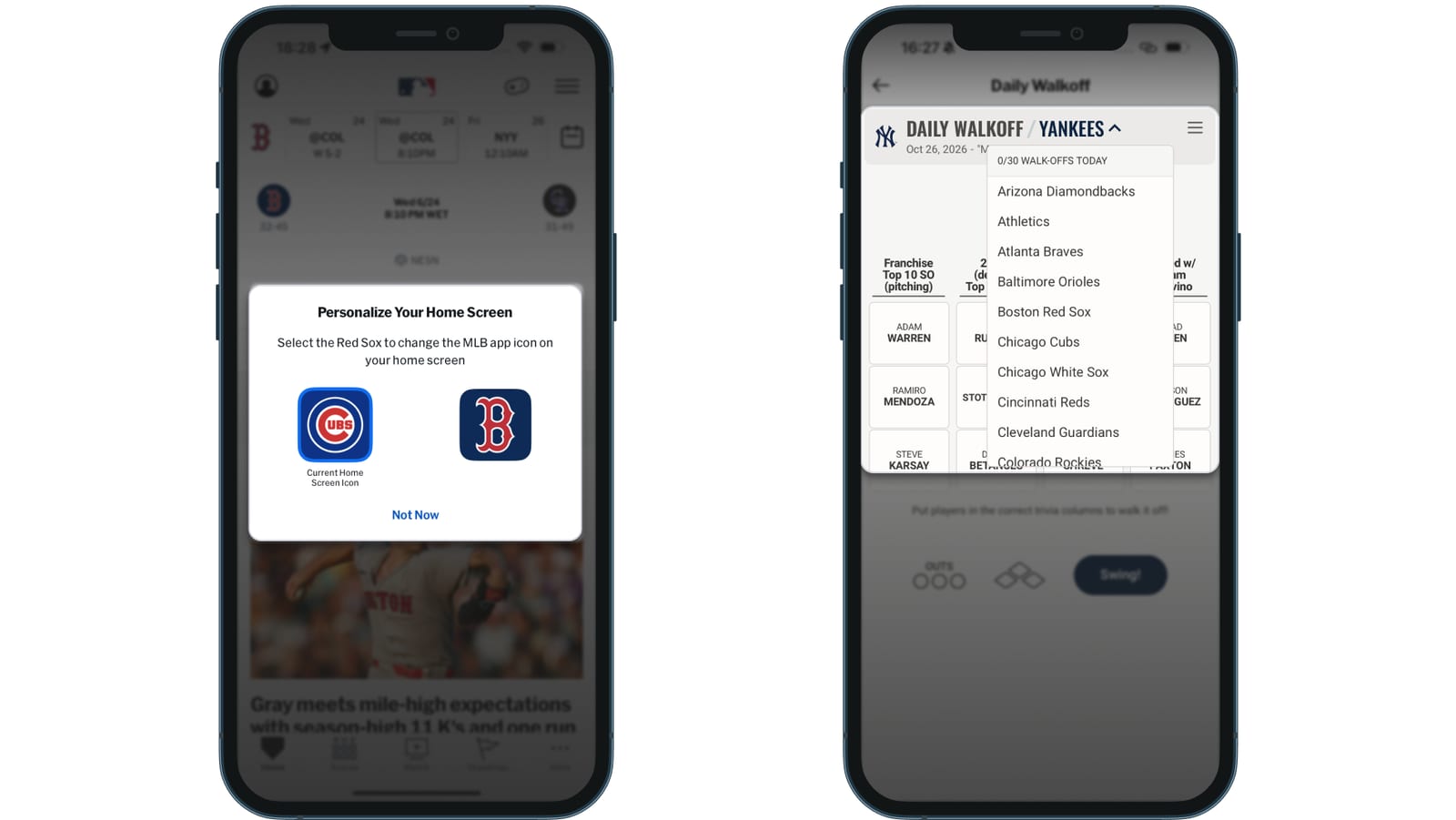
Make the Tigers your favourite MLB team, open Daily Walkoff, and it starts you on the Yankees.
That’s surprising, because MLB’s main app has the deepest personalisation we’ve seen in this series. It will even swap your app icon for your team’s crest. Yet its own daily games, a few taps away, ignore your favourite team.
We saw the same thing in all four apps we tested. Gamification in sports apps is now standard: F1, MotoGP, MLB and the FIFA World Cup 2026 app run close to thirty games between them.
For a digital team, games earn their place: they bring fans back between matchdays and give sponsors somewhere to show up.
We looked at them in three passes. Can fans find the games? Are the games any good? Do they bring fans back? Then we look at why almost none of them know your team.
Key findings in 60 seconds
Four major sports apps (F1, MotoGP, MLB and the FIFA World Cup 2026 app) run close to thirty fantasy, prediction and loyalty games. The games are strong, but return hooks are uneven and almost none use the fan's favourite team.
- The best mechanics run deep: data-driven daily picks, salary-cap fantasy, an RPG economy and mid-weekend prediction scoring.
- The app with the richest fantasy product has no streaks, badges or gamification alerts that we could find.
- The most complete loyalty system in the set lives on a website the app never links to.
The games are built with real craft. They just don’t know the fan’s team.
| Dimension | F1 | MotoGP | FIFA World Cup | MLB |
|---|---|---|---|---|
| Where the games live | Two products, one tab | 6+ products on separate domains; the best has no in-app link | 15 products in a web Play Zone that opens in Safari | Six games in one in-app hub |
| Flagship mechanic | Predict scores qualifying before race day | 40M salary-cap Fantasy | One Future Football, an RPG with its own in-game economy | Beat the Streak, daily picks for a $5.6M prize |
| Reasons to come back | None found: no streaks, badges or game alerts | 7-day streak, badges and XP tiers in the hidden Fan Club | Play Zone-wide Level/XP and daily sticker packs | Per-game streaks and badge milestones |
| Knows who you follow? | Greets you by name only | Collects a favourite team; other products ignore it | Shared username; sponsor opt-ins inside the games | No team link in any of the six games |
How many games, and can fans find them?
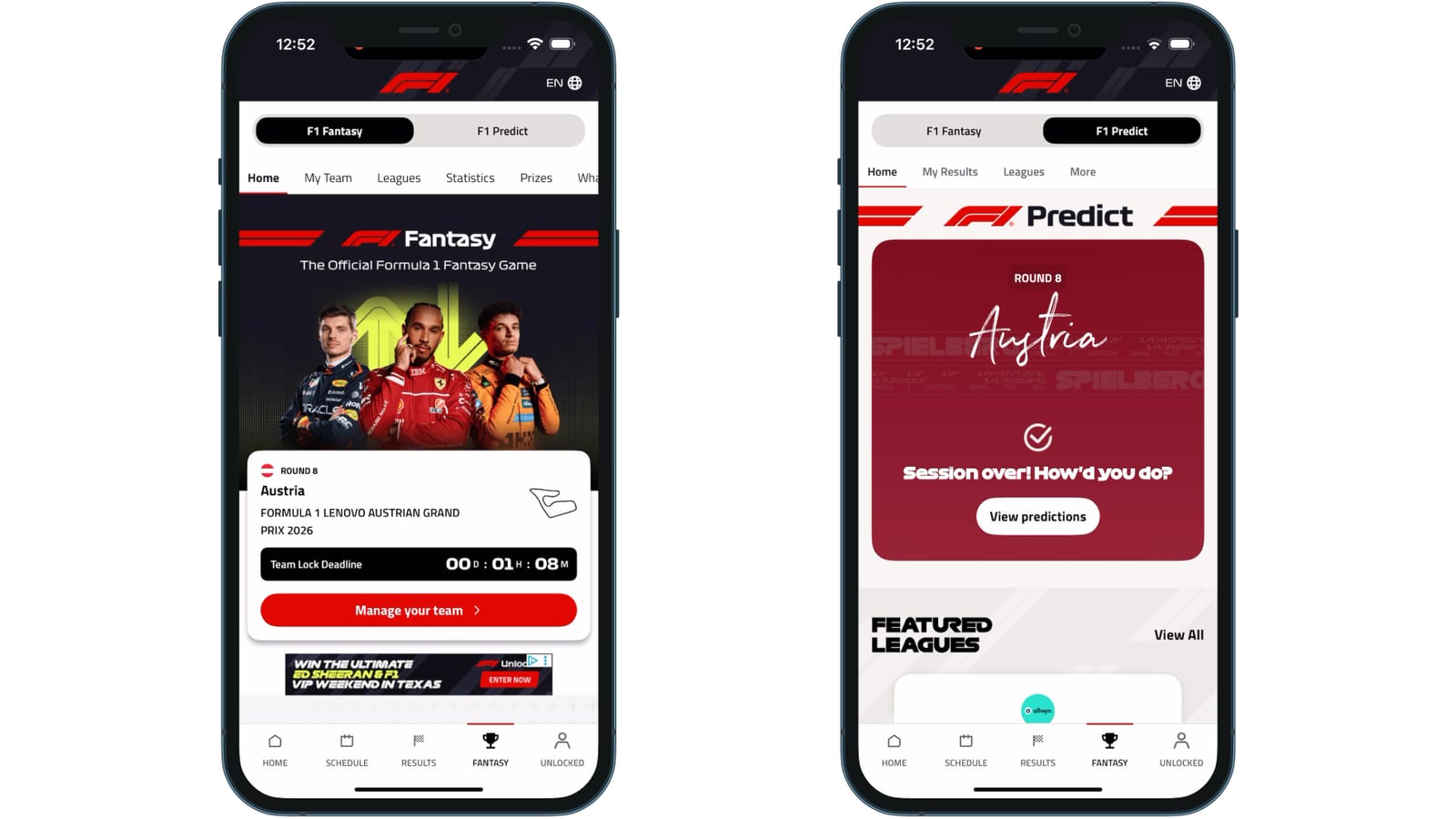
F1 has the tidiest setup. F1 Predict for race-weekend calls and F1 Fantasy for the season share one FANTASY tab.
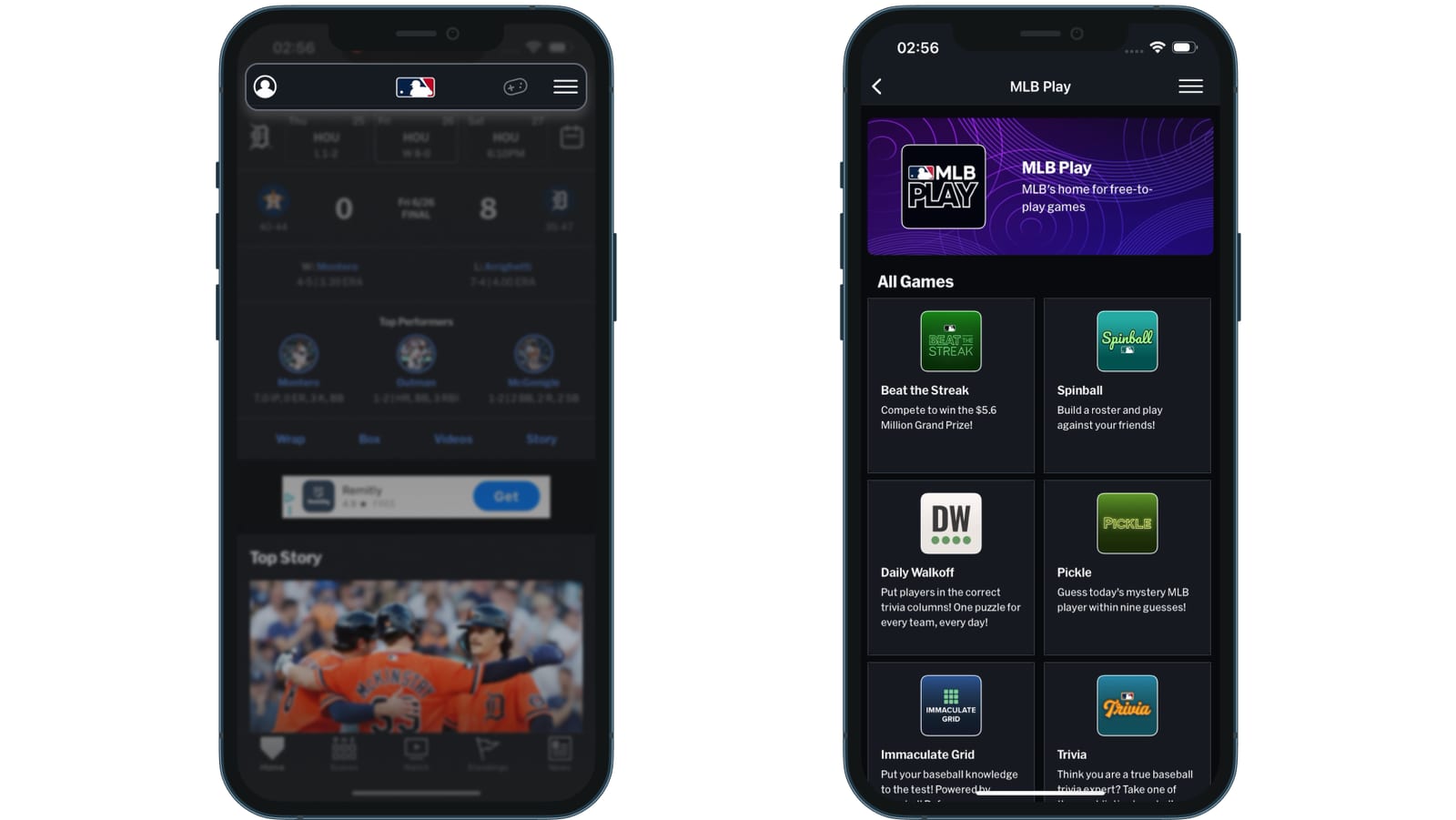
MLB is almost as neat, with six daily games behind one gamepad icon.
MotoGP went the other way. It runs at least six products on separate domains. The most complete one, Fan Club, has no link anywhere in the app. We found it by searching the web.
The World Cup app has the biggest catalogue: fifteen products in one Play Zone, under one username. The catch: Play Zone lives at play.fifa.com and opens in Safari, so fans mostly discover it through push notifications.
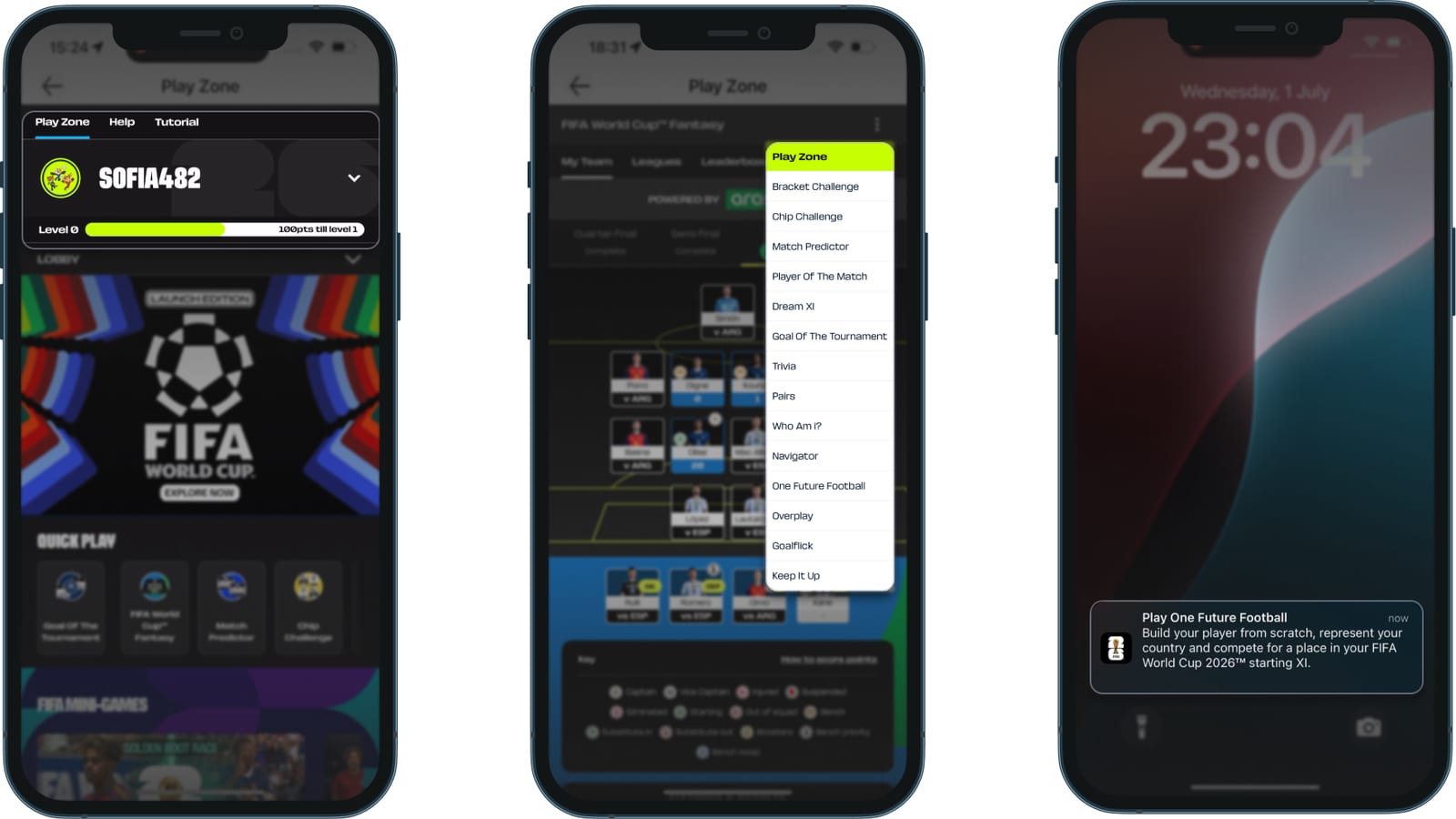
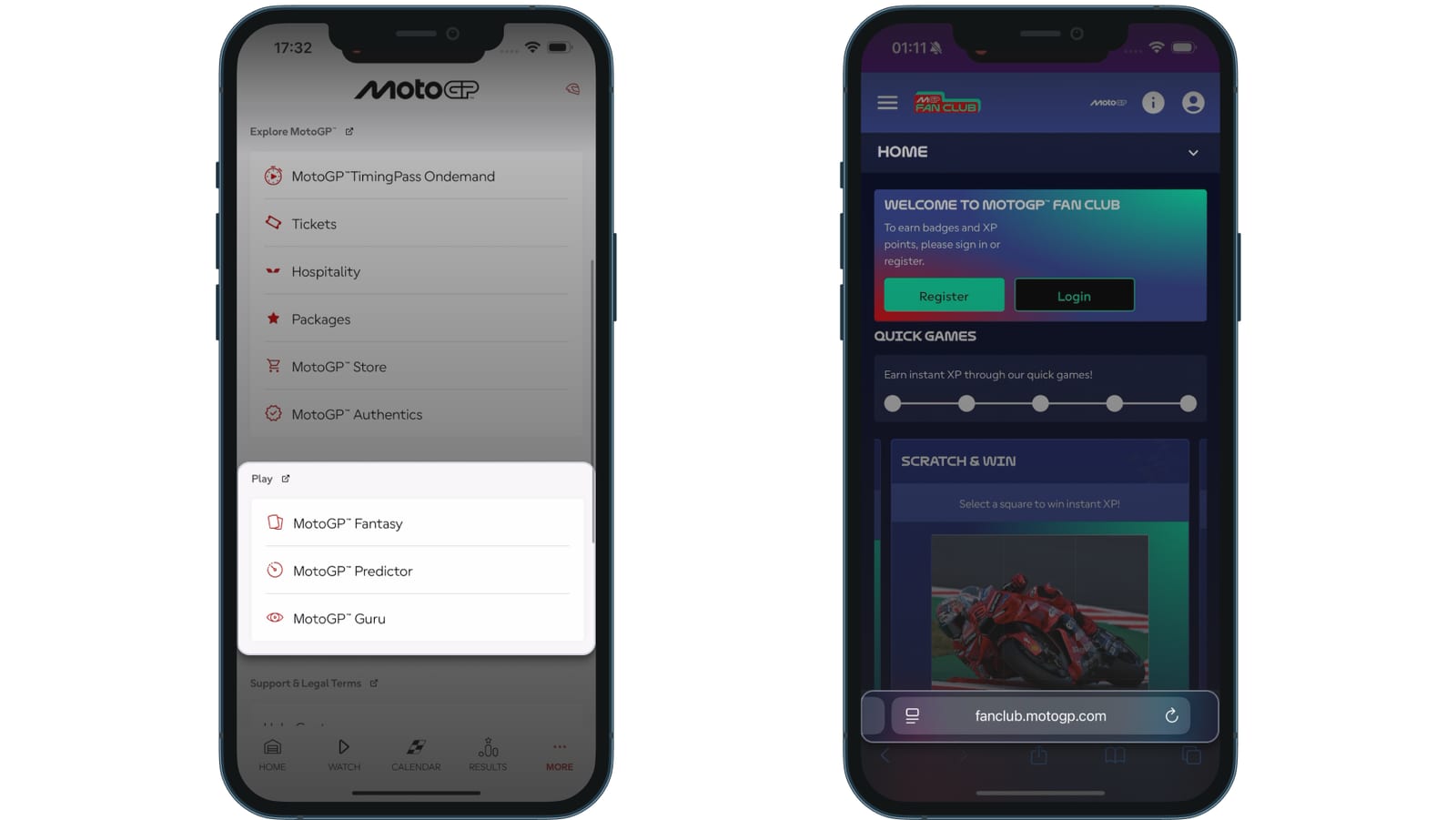
So half the apps make fans hunt for their games. Are they worth the search?
Once you’re in, the games are seriously good
F1 Predict scores your qualifying picks mid-weekend, so by Sunday’s race you’re already halfway through a game. It’s the best prediction mechanic in our research, because one guess pays out in stages.
MLB’s Beat the Streak uses the same Statcast data as the live product. Each daily pick shows a hit probability (68.9%, say) and a batter-versus-pitcher card, chasing a $5.6M prize.
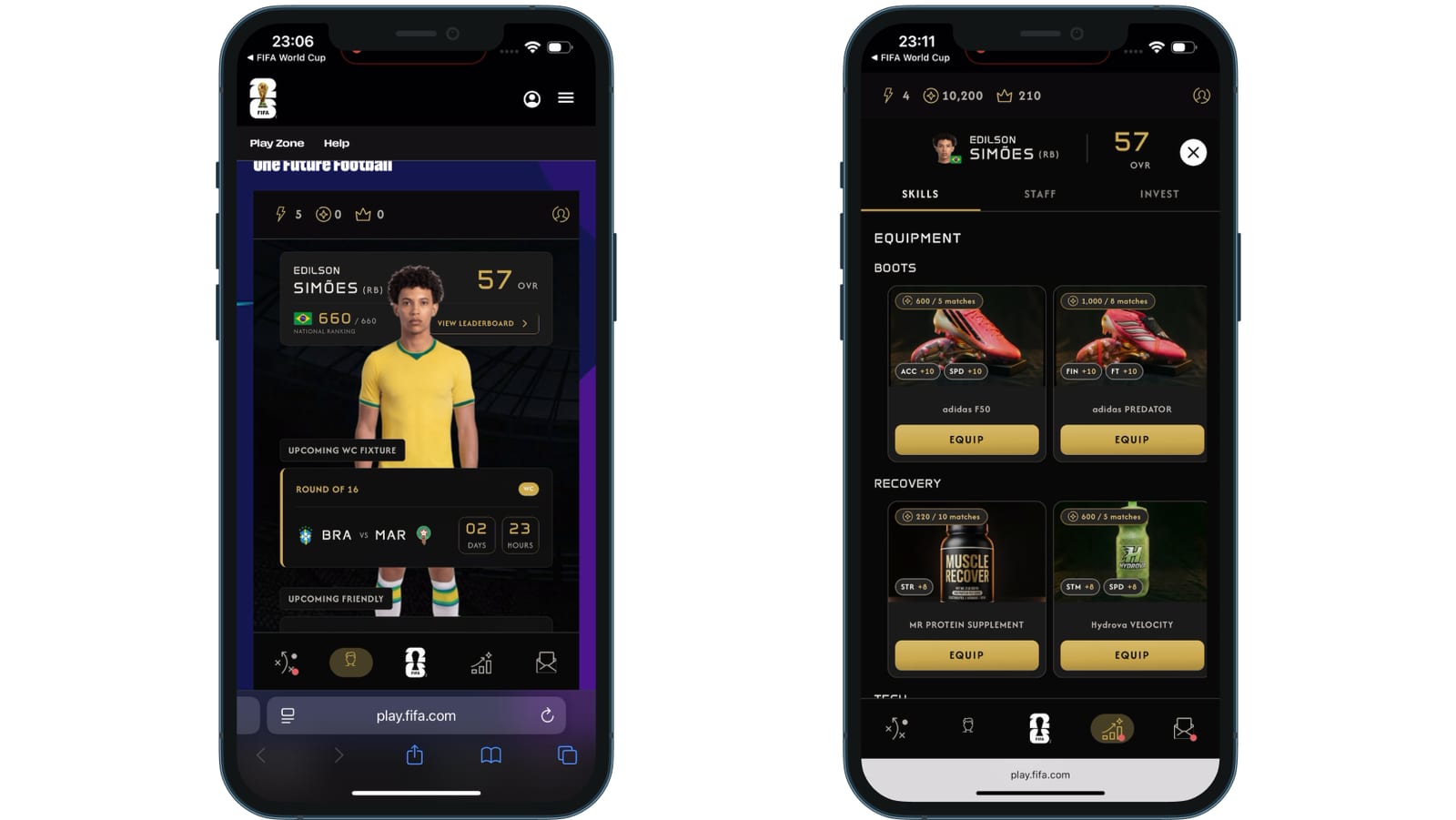
The World Cup app aims highest with One Future Football, a full RPG with two currencies, three ways to spend them and an energy bar you refill through mini-games.
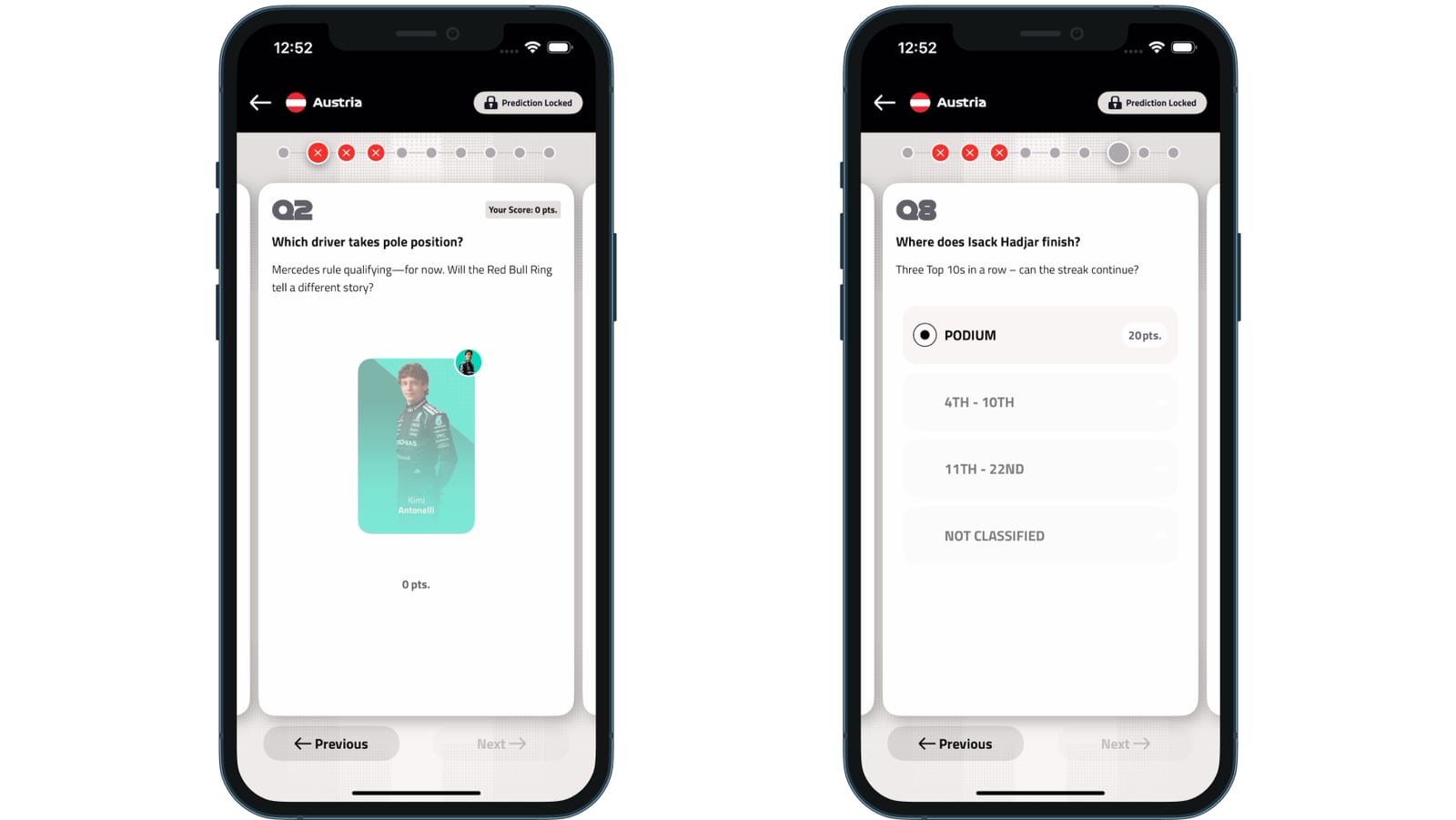
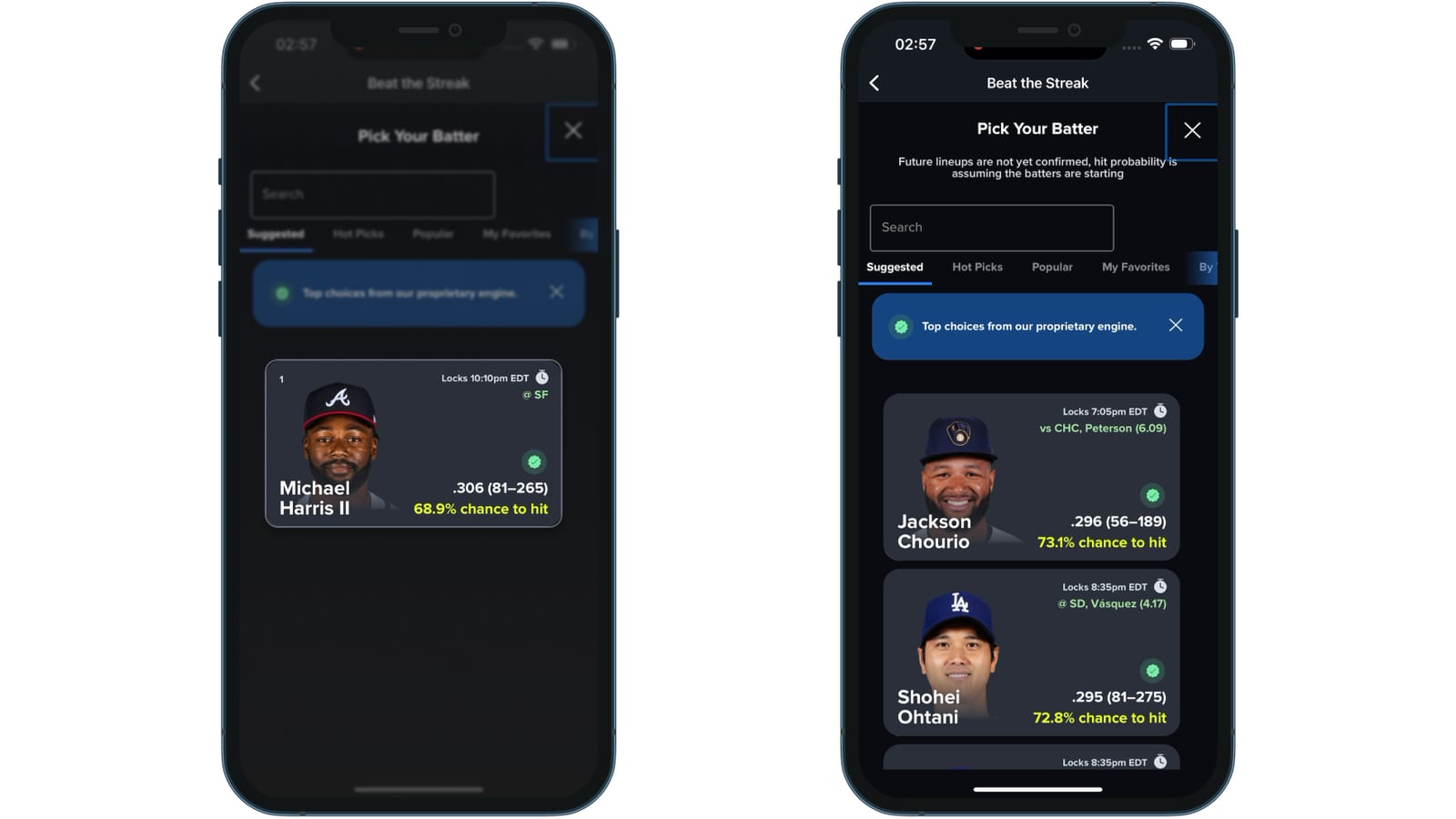
But F1 shows that depth has limits. Its games are arguably the most polished in the set, yet we found no streaks or badges. We saw no sign of game push notifications either, in its App Store listing or around twenty changelog entries.
A great game gets a fan to play once. To bring them back the next day, the app needs return hooks like streaks, badges or reminders.
Does the game show up when it matters?
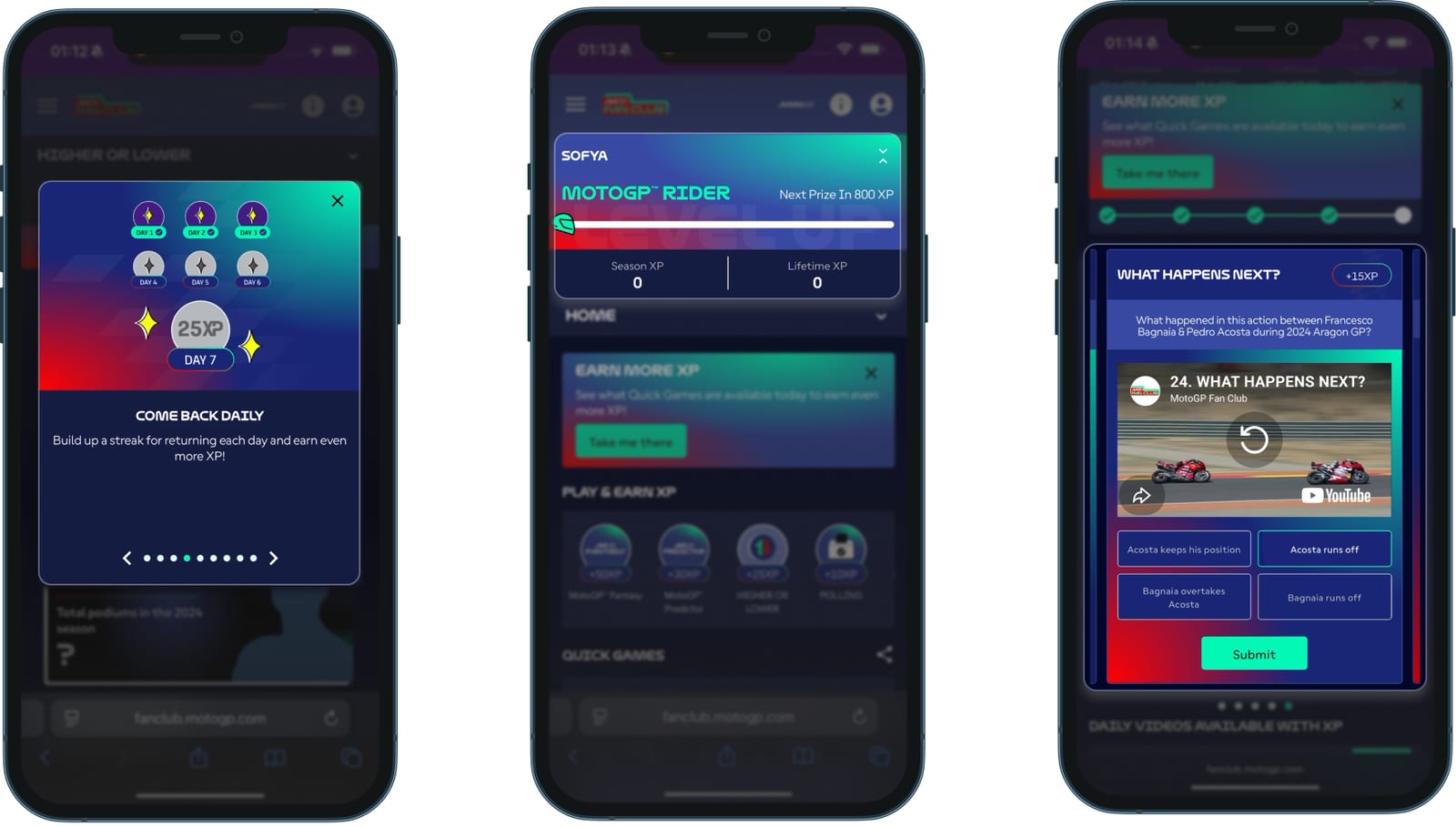
MotoGP has built those hooks. Its Fan Club has the most complete loyalty system we found: a seven-day login streak, badges, XP tiers and quick games.
Its What Happens Next game, our favourite idea of the episode, turns archived race footage into a prediction game. But the app never links to Fan Club.
The loop most likely to bring fans back is the one they’re least likely to see.
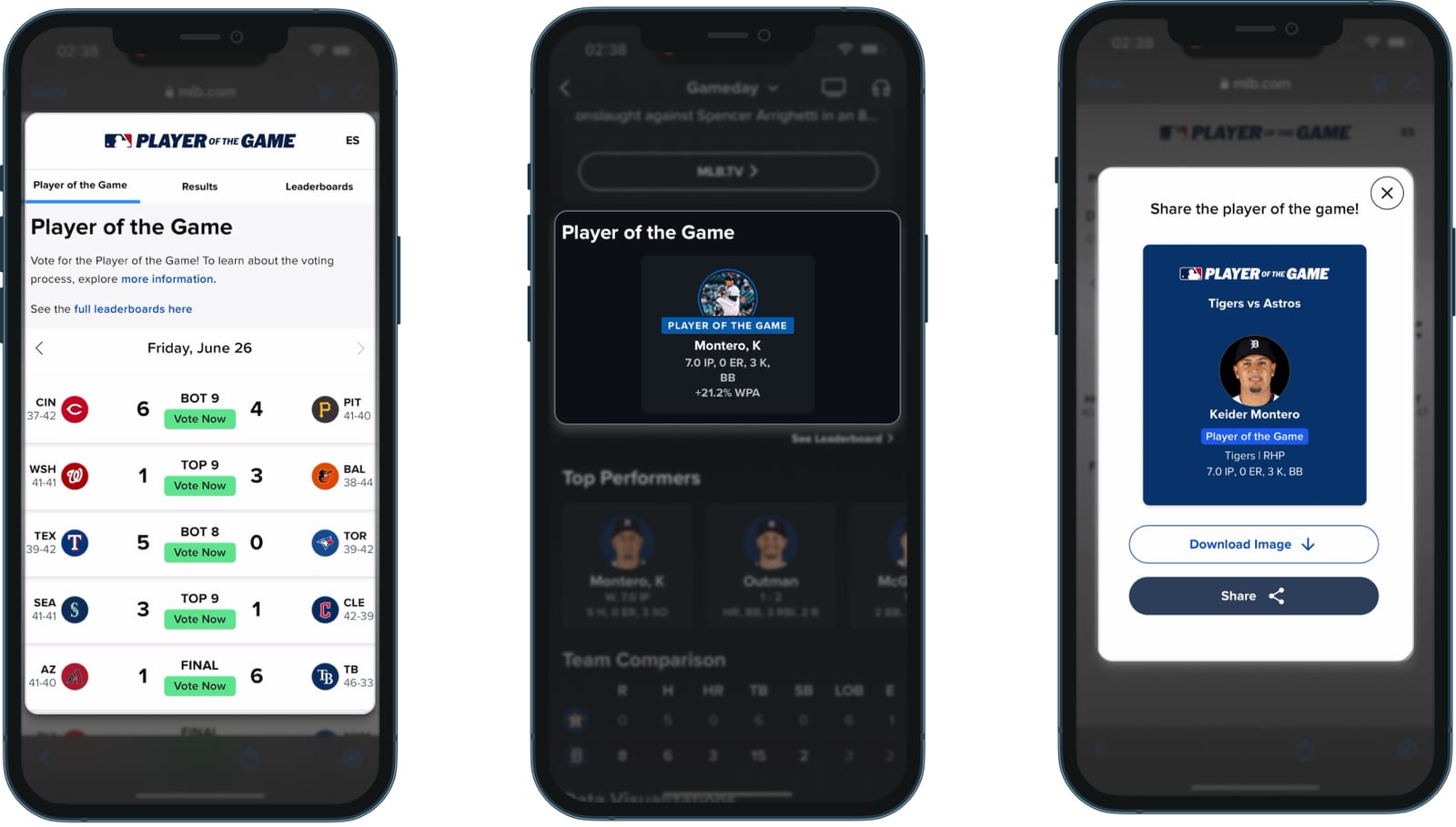
MLB’s Player of the Game shows a loop like that in plain sight. Fans vote after the sixth inning from a list ranked by Win Probability Added. The result joins a season leaderboard, and the winner gets a branded card to share.
We like that it shows the maths: the winner’s WPA (+21.2% for Keider Montero) is right there.
These loops share one gap, though. Almost none of them use what every app asked at sign-up: the team you follow.
Back to the Yankees: the games that forget your team
MLB is the clearest case. Its main app knows your team well enough to build My Players, My Videos and My News around you.
The six games ignore all of it, which is how a Tigers fan ends up starting Daily Walkoff as the Yankees. You can switch, but Detroit isn’t pinned: the list starts at Arizona.
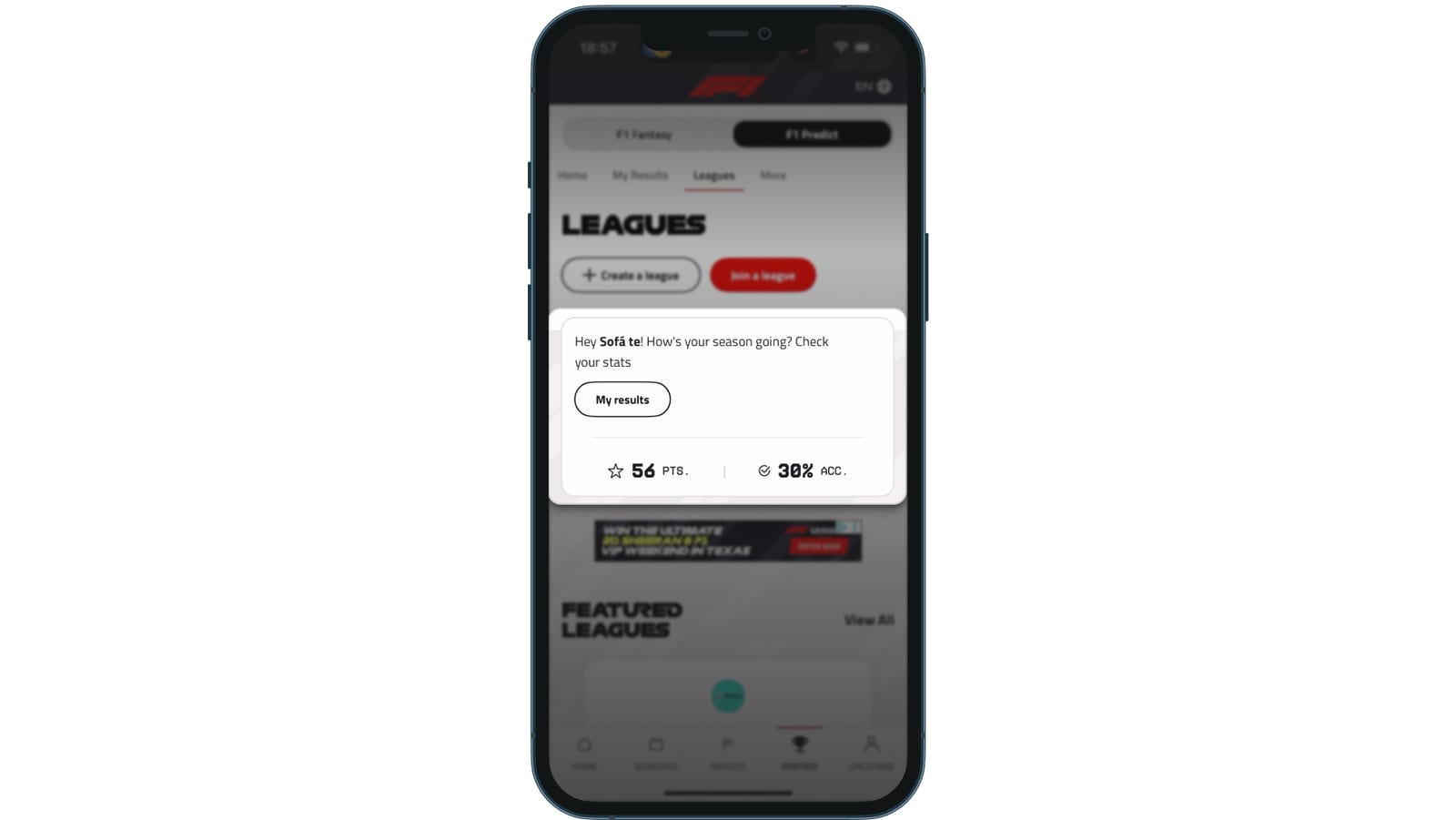
The other apps follow the same pattern. Inside its games, F1 greets you by display name and stops there. MotoGP asks for your favourite team, then doesn’t carry it across its products.
The World Cup app does use your identity, but for its sponsors. Before you can save a Fantasy team, the app asks you to opt in to Aramco marketing and profiling. Chip Challenge asks the same for Frito-Lay.
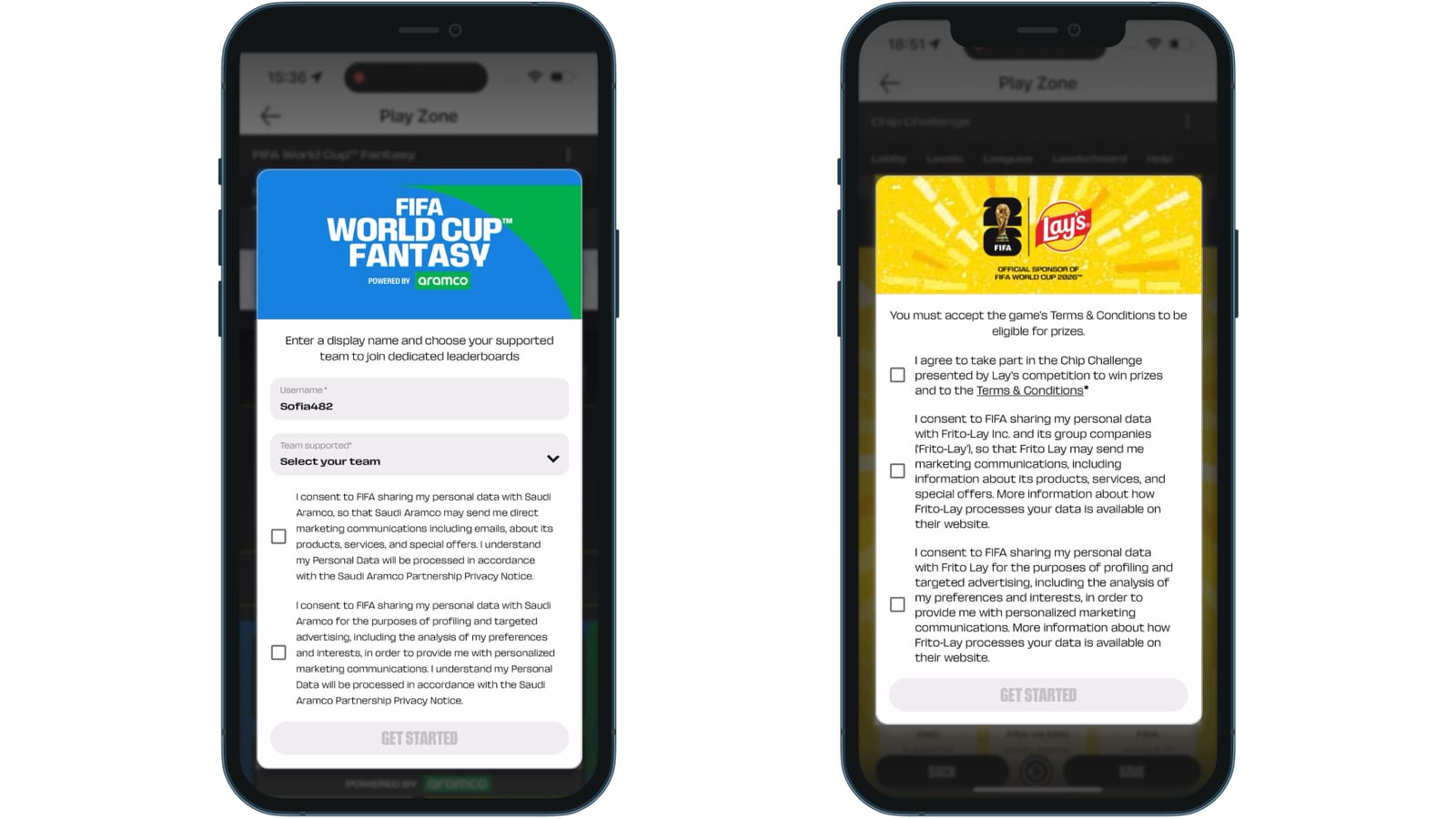
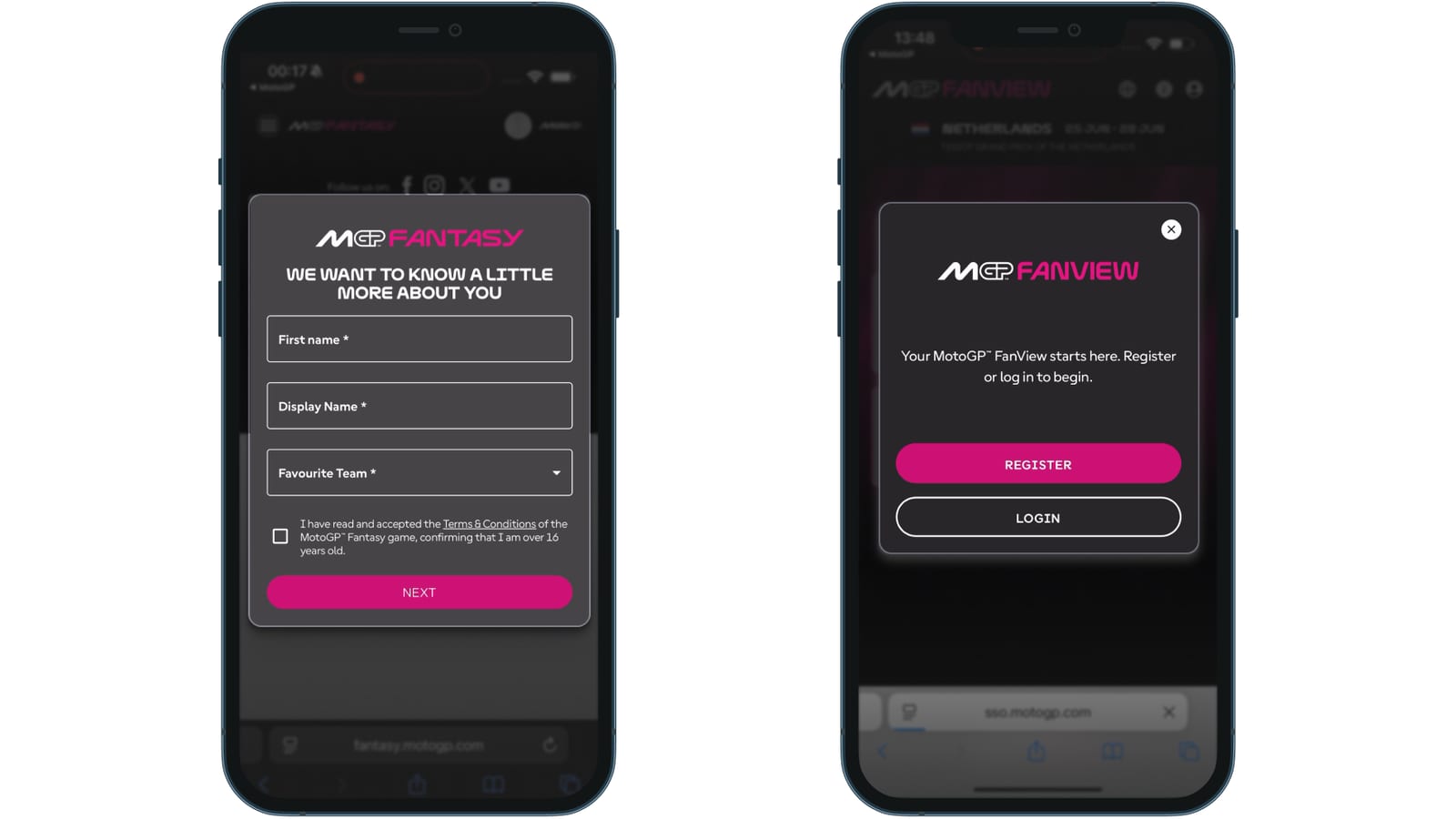
You could argue that a game should treat every fan the same. But these apps asked for your team so the experience would feel personal. The games could use it too: think of bonus points when you back your own driver, or predictions about your own club’s next match.
Sponsors would gain too. A fan playing for their own team cares more about the result, so we think a sponsor next to that game gets more attention than one on a generic leaderboard. Each pick also tells the organisation more about that fan, in data it owns.
Why the games forget: too many front doors
Look at where the games live. MotoGP spreads them across separate domains, and the World Cup app sends fans to a Safari hub with sponsor opt-ins.
Each game has its own front door and its own idea of the fan, often because separate teams or partners run them.
Joining them up is front-end integration work: one fan identity, passed into every game the app opens. It needs planning across products and partners, so it often gets pushed to a later release.
What this tells us about gamification in sports apps
All three passes showed the same picture: serious games, built with real craft, a few taps from a favourite-team setting they never read. Linking the two is where we’d start.
A club or federation app with a single prediction game can start in the same place: open the game on the fan’s own team, and show their score next to that team’s news.
As we said in Episode 3, a preference is only worth collecting if it changes the experience. Games are where fans would feel that change most.
Frequently asked questions
What is gamification in sports apps?
Gamification in sports apps means building games and game mechanics into an official app: fantasy leagues, prediction games, daily picks and loyalty programmes, plus return hooks like streaks, badges and XP. The F1, MotoGP, MLB and FIFA World Cup 2026 apps we tested run close to thirty games between them.
Which sports app has the best prediction game?
In our testing, F1 Predict. It scores your qualifying picks during the race weekend, so by Sunday's race you're already halfway through the game, and one set of guesses pays out in stages. The trade-off: we found no streaks, badges or game alerts to bring fans back afterwards.
Why don't sports app games use the fan's favourite team?
In many apps, each game has its own front door. Games often live on separate domains or partner platforms, each with its own idea of the fan. Passing one fan identity, favourite team included, into every game is front-end integration work across products and partners, so it tends to slip to a later release.
How can a sports app make its games more personal?
Start with the team the fan already chose. Open each game on that team, give bonus points for backing your own driver or club, set predictions around your club's next match, and show the fan's score next to their team's news. A club app with a single prediction game can start there.
This is Episode 4 of 6 in UX Rerun. Catch up on Episode 1, Episode 2 and Episode 3. The full season comes together in our Fan Engagement Benchmark.
Fan Engagement Benchmark