
Building better TV Apps on Roku: Tips from the pros
Are you an aspiring developer looking to create a successful TV app for a Roku device? Look no further! In this blog post, we’ve compiled a list of top tips to help you go from zero to Roku hero. Whether you’re new to Roku development or want to enhance your expertise, these tips from our developers will provide you with valuable insights into the key factors involved in TV app development. So, let’s get started! Get familiar with OTT Understanding OTT is important as it is a key delivery mechanism for TV apps. Explore the key factors in TV app development There are various factors to consider when developing a TV app, such as UI/UX design, content delivery, and compatibility with different devices. Understanding these factors is essential for creating a successful app. #1. Get a Roku device Roku is a popular platform for TV apps, and having a device to test your app on can be helpful for troubleshooting and optimizing the user experience. #2. Don’t look at the Direct Publisher option Direct Publisher is a Roku tool that allows you to create a TV app without coding. However, as a developer, it’s better to learn and understand the underlying code rather than relying on a tool that may limit your app’s functionality. #3. ReLearn SceneGraph & BrightScript (and learn it from scratch) SceneGraph and BrightScript are programming languages used in Roku app development. If you’re new to Roku development, it’s important to learn these languages thoroughly. #4. Read the Roku documentation Roku has extensive documentation on app development that can be helpful for troubleshooting and understanding how to implement different features. #5. Run samples from GitHub Roku provides sample code on GitHub that you can use to learn and test different features. #6. Google it! (but don’t expect too much) When seeking information on Roku development, search online for resources and participate in the Roku Developer Community. While documentation may be limited, don’t give up easily. Stay persistent, use your problem-solving skills, and experiment until you find a solution. #7. Deploy, Test, and Debug Thoroughly Testing and debugging are essential for ensuring your app is stable and functional. New: It’s important to thoroughly deploy, test, and debug the application to ensure it works properly and that any issues are fixed before it’s released to end users. #8. Don’t lose your focus- TV developer’s term but you will use it soon “Don’t lose your focus” is a term commonly used in TV app development and refers to the importance of maintaining a clear and consistent user experience throughout the app. Keep learning Building better TV apps on Roku requires attention to detail and a deep understanding of the platform’s capabilities. By following these tips, you can create high-quality apps that provide a seamless and engaging user experience. From optimizing graphics and animations to incorporating the latest technology and features, there are many ways to elevate your app above the rest. With the right approach and mindset, any developer can build a successful TV app on Roku and reach a broad audience of viewers. Keep learning and experimenting, and you’ll be well on your way to creating the next big thing in the world of streaming TV.
How Our Partnership with Penthera is Revolutionizing Offline Video Viewing for Serving OTT Customers
At 2Coders Studio, we’re always striving to deliver the best possible video streaming experience for our customers. That’s why we’re very proud of our recent partnership with Penthera, a company that offers a powerful suite of download solutions for mobile devices. By integrating Penthera’s technology, we are now able to offer a convenient way to download and watch video content offline. Conquering Obstacles: Our Journey to a Functional Download Service Solution for OTT Platform One of the biggest challenges for video streaming on mobile devices is the use of mobile data. Many users find it frustrating to constantly use up their data plan while streaming videos on the go. At the same time, there’s a growing need for reliable ways to download video content for offline viewing, especially in areas with poor internet connectivity. According to our research, in many developing countries, internet penetration is still very low, with only 22% of the population having access to the Internet in Africa and 12% in South Asia. Moreover, in many areas where internet connectivity is available, it may be too slow or unreliable to stream videos smoothly. This is why, offline video viewing is becoming increasingly important in areas with poor internet connectivity. With billions of people worldwide still lacking internet access, the demand for offline video viewing is likely to continue to grow. Our partnership with Penthera provides a powerful solution to these challenges. By integrating Penthera’s Download SDK into our front-end, multi-device OTT app, we offer our viewers a way to download video content and watch it offline, without worrying about data usage or internet connectivity. Penthera’s SDK works seamlessly for mobile (iOS and Android), making it a versatile solution for our customers. The Integration Process Integrating Penthera’s technology into the OTT projects was a smooth and straightforward process. Our team worked closely with Penthera’s technical experts to implement the Download SDK into the platform, ensuring it was compatible with the existing solution and user interface. The Penthera platform integration process went smoothly on Android. With the help of their well-written documentation and the team itself, the main SDK implementation was a breeze. The whole process took only a week to get it properly working and tested by our QA team. After conducting tests, the team behind Penthera has received feedback. They developed a constantly updated Demo application that serves as a how-to guide for the most challenging parts we’ve encountered. While developing, all additional information from the debug set of libraries helped us achieve our desired goals. Components of Penthera’s Download Solution Since the SDK supports a wide variety of Mobile OS versions, we were able to have 94% device coverage and meet Google Play’s recommended API level requirements. The release notes that were included with each new release of Penthera SDK were used to keep our code aligned and updated with the SDK. Penthera’s Download solution consists of Penthera Cloud (a server backplane) and Penthera Virtuoso SDK (which manages all communication to the cloud server). The main advantage that we had is the versatility while picking the media player of our choice, Penthera supports them all via wrappers for AVPlayer on iOS, ExoPlayer on Android, and others. As with any other SDK, this one also supports User Authorization and analytics which we also implemented. To comply with the various privacy regulation, it only creates a User ID that is tied to a device which allows us to track useful events to further improve our application and media streaming experience. Why is this integration the solution? There are many benefits to using an OTT platform with Penthera’s technology. For one, it allows the customers to watch their favorite videos offline, which is great for long flights, commutes, or trips to areas with limited internet connectivity. It also helps customers save their mobile data usage, as they can download videos on Wi-Fi and watch them later without using up their data plan. Additionally, Penthera’s technology ensures a smooth and reliable downloading experience, so the customers can enjoy their videos without interruption or buffering. Future Plans for user success Our partnership with Penthera is just the beginning. We are excited to explore new ways to use Penthera’s technology to enhance OTT platforms and provide even more value to our customers. We are committed to staying on the cutting edge of video streaming technology, and our partnership with Penthera is a key part of that strategy.
The benefits of outsourcing your native app development project
As technology continues to evolve, businesses are seeking innovative ways to stay ahead of the competition. One way to do this is by developing a native mobile app that can provide customers with a unique and convenient user experience. When it comes to app development, outsourcing has become an increasingly popular option for businesses of all sizes. By outsourcing your native app development project, you can benefit from a range of advantages that can help you save time and money, while also ensuring that your app is of the highest quality. Key advantages of outsourcing your native app development project Whether you’re a small startup or a large enterprise, outsourcing your app development can help you achieve your goals more quickly and efficiently than trying to build an in-house team from scratch.In this blog post, we’ll dive into some of the key advantages of outsourcing your native app development project, including reduced costs, access to a wider pool of talent, and the ability to focus on your core business activities. Reduced costs Outsourcing your app development can be more cost-effective than hiring an in-house team because you can avoid costs associated with salaries, benefits, equipment, and other expenses. You can also save on infrastructure costs such as office space, utilities, and equipment maintenance.Additionally, outsourcing allows you to benefit from the economies of scale of a larger development company. Access to a wider pool of talent When you outsource your app development project, you have access to a wider talent pool than you would if you were developing the app in-house. This can be especially beneficial if you need developers with specialized skills, such as those who have experience working with specific programming languages or frameworks. Outsourcing allows you to tap into a global talent pool, giving you access to developers who are located in different parts of the world and who bring a range of perspectives and expertise to your project. Focus on what you do best Developing a mobile app can be a distraction from your core business activities. Outsourcing your app development project can free up your internal resources, allowing you to focus on your core business activities. This can help you improve your overall business performance and drive growth. By outsourcing, you can ensure that your app development project is in good hands, allowing you to focus on what you do best. Advanced technology Developing a high-quality mobile app requires a team of skilled developers with the right tools and resources. Outsourcing your app development project can ensure that you have access to the latest technologies and tools, including design and development software, project management tools, and testing tools. A reputable vendor will have a quality control process in place, ensuring that your app is developed to the highest standards possible. This can help you avoid costly errors and bugs that can negatively impact your user experience. Outsourcing: A Strategic Approach to Native App Development Outsourcing your native app development project can be an effective way to ensure that your app is developed efficiently, effectively, and to the highest standards possible.By partnering with a reputable vendor, you can access a team of experts with specialized skills, access to the latest technologies and tools, and a global talent pool. This can help you save time and money, improve your overall business performance, and drive growth.If you’re considering outsourcing your native app development project, be sure to do your research and choose a vendor with a proven track record of delivering high-quality results.
OTT Advertising: What are OTT ads and how do they work?
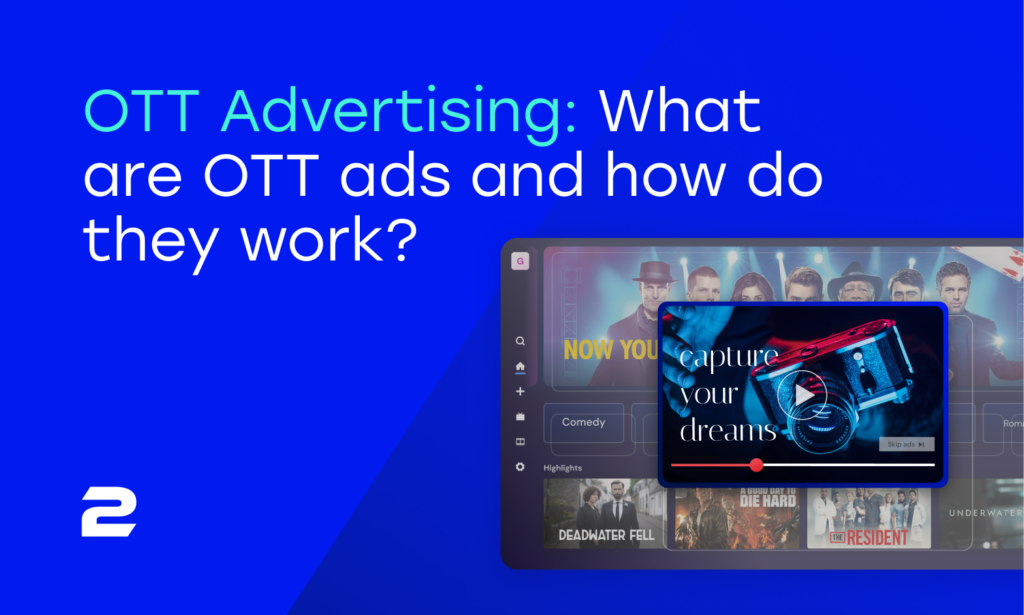
Before we dive into the OTT advertising industry and start talking about all the different options to promote your media content on an OTT platform, let’s take a look at why that might be a great idea. Cable television is slowly going to history with the rise of new technology for streaming media content – the OTT platforms. OTT platforms, or OTT apps, (e.g. Netflix) are media streaming apps that deliver video and audio content using the internet rather than cable or satellite TV. And they are winning on more than one front in the battle for audiences with traditional TV. What is OTT Advertising? Similarly to regular TV advertising, OTT advertising is distributed via streaming media but this time on OTT platforms instead of TV channels. OTT ads are the advertisements delivered to viewers within this video content. The good thing about OTT platforms is that they can stream your video content (including your OTT ads) on all of these devices: And allow you to reach your audience wherever they are. Even in the audio world of OTT advertising, we have audio OTT ads. Let’s take Spotify for example. Here the ott (audio) ads are delivered on the free version of the platform in-between songs, in the middle of a podcast episode, or whatever your audience is listening to. Of course, they can always choose to subscribe to premium and pay to continue using their platform without the interruption of ads. In other words – ads equal money because they bring new business opportunities from interested people that might have never heard of your brand before. The technology is expected to vastly improve in the upcoming years and offer tech-savvy marketers a field of abundance to reach their ideal audience in the right way at the right time. This is thanks to the benefits of programmatic marketing (which results in hyper-targeted, super-effective ads), as well as the growing reach of people who transition from traditional TV to streaming services. OTT ad revenue is expected to grow from 45% to 60% over the next ten years, so AdTech developers and early adopters will soon benefit from it. The streaming provider determines the delivery methods and how the platform interacts with OTT devices (whether Amazon Fire TV, Roku, Apple TV, or another service). This may include using Video Ad Serving Templates (VAST), whose popular videos are often OTT. Ads inserted by server-side (SSSA) and client-side (CSAI) could also be done. This whole sequence looks like this: 1. First, you create your target OTT audience for the specific ad based on the subscription data the platform has on its users. Some OTT platforms contain additional data about the subscriber, like household information or the users’ preferred genre or specific searches for content watched on the platform, to name a few. 2. Next, you develop your creative asset. The creative asset should be visually appealing – following your brand guidelines, should grab their attention with the message you want to convey, and they should be tailored to the target audience.*You choose the format of your ads based on your audience, but most ads on OTT are often between 15 to 30 seconds long. 3. Then, you launch the campaign. The platform starts to search the audience for your requirements and will match the audience to the specific TV subscriber lists on various OTT platforms. The ads are pushed, downloaded, and buffered by the OTT devices. 4. Finally, ads are displayed on OTT platforms, where, depending on the platform, the OTT devices of your viewers are reached using VAST or VPAID tags. 5. Reporting for analysis: After a specific time from the campaign’s launch, the OTT operator sends back ad-exposure results, and the platform gives you a report on the performance of your ads. Linear vs. Non-Linear Ads Maintaining a user’s satisfaction is essential for advertisers who use video ads to try to be less intrusive and more considerate of their viewers’ experience. Pushing the boundaries might annoy some users and hurt monetization, while the right combination of video and content can result in a wonderful experience. It is always a good idea to start by experimenting with various ad formats to make sure the environment is as optimized as possible from all aspects: monetization, usability, and precise targeting. The two primary forms of in-stream video advertising are linear and non-linear video ads. Linear Video Ads In linear video ads, ads take over an ongoing video before the main content is displayed. The ads comprise pre-roll, interactive takeovers, or bumper vignettes. Non-linear Video Ads Non-linear ads run alongside the main content in the same player. They appear while the main content is displayed without potentially disrupting its flow. OTT Ad-Insertion Methods There are two main methods for ad insertion in OTT advertising: CSAI and SSAI. CSAI (Client-Side Ad Insertion) CSAI works by sending requests from the video player to an ad server, which returns the ad. SSAI, on the other hand, works by inserting (or stitching) ad media directly into the video stream, eliminating the need to call a server to receive ads. Here’s a more detailed explanation: CSAI (Client-Side Ad Insertion) is a method of delivering ads to clients via different devices (desktop, mobile, CTVs, gaming consoles, and so on) in which the client (the video player of the OTT app where the person is watching the video) requests an ad from the ad server when it reaches specific ad-markers in the stream or in the manifest (HLS/DASH). When the ad server receives a request from a client, it responds with the “right” ad for the client based on the data collected from the client including other information (campaigns, preferences, etc.). The video player then pauses the video, shows your ad (or group of advertisements), and then resumes video playback. After the campaign, the client has a responsibility to send you the report (we mentioned earlier) on ad metrics: playback, quartiles, interactives, etc so you can analyze your ad performance. Although this
How to Structure a Successful Internship Program for Software Engineers?

As the necessity for tech solutions for digital businesses continues to increase, the demand for software engineers grows simultaneously. However, to be able to kickstart their career, students in software development have one more obstacle to overcome – experience. Today, tech companies require more than a degree when they seek potential employees. For them, it’s equally important that their new team members can demonstrate the ability to work in this environment and produce results. According to latest industry stats, approximately 70% of employers offer their interns full-time jobs and 56% of all interns in the United States have accepted job offers from the company they interned for. So, if you’re a founder of a software company or a student in software engineering, you will both benefit from an internship program – it’s a win-win situation. Here’s how to structure a successful internship program so that you can both have the best experience possible. The Cornerstones of a Software Engineer Internship Framework There are four major elements in the core area of structuring a successful internship program in software development. Snapshot of our Internship Program for Software Engineers The latest internship program for front-end development at our company lasted 3 months and was carried out by our senior developers Nenad and Hristijan. More specifically the program covered: This time we decided to document the process and then turn it into a visual framework. We also prepared a useful checklist that we can share with the community. Quick checklist: We try our best to only recruit interns who we can properly support and possibly retain as full-time engineers. We’re still trying to do this the right way. Even though they have coding skills, a lot of the interns in our program have never had formal employment in the tech sector. Most businesses are able to be of assistance for this type of internship. However, many companies are simply not in the position to support interns who have never seen code before. Investing resources in the form of time, effort, money, and education and bringing up people from that level requires a certain structure. Avoid hiring folks you can’t support when you’re developing an internship program that you intend to use to scout talent. It’s disappointing for both sides = your interns are disappointed because in the end you didn’t hire them, and it’s disappointing for the company as well because the internship program fails to deliver on your intended goals.
The Top 10 Resources That Saved My Life as a Business Analyst
By Elena Kojcheva, Business Analyst @ 2Coders As a business analyst, I aim to help maximize business effectiveness through data-driven decisions. Therefore, I use data to form business insights and then recommend changes in my projects which ultimately lead us to take the smart step forward. I’m able to identify issues in virtually any part of the projects, but my focus lies in the requirements of the engineering department and its processes while working in an Agile organization – 2Coders. As businesses seek to increase efficiency and reduce costs, people like me have become an essential component of their growth and business process improvements. With two master’s degrees behind me, one in Business Administration (M.B.A) at Franklin University, and the other in IT Management at the Faculty of Computer Science and Engineering, I still believe that you never stop learning because the world never stops evolving, especially in tech. So, here are my top 10 favorite resources that helped me keep up with the demands of the modern business world and practically saved my life as a Business Analyst in the fast-paced era of software development and tech solutions. #1. Inspired: How to Create Tech Products Customers Love – a book by Marty Cagan, Silicon Valley Product Group The first on my list is one of my favorite books that talks about “how today’s most successful tech companies―Amazon, Google, Facebook, Netflix, Tesla―design, develop, and deploy the products that have earned the love of literally billions of people around the world…” I truly enjoyed reading it, as it is not only stacked with valuable insights but it is also very well written. It opens up your mind to new ideas, and new ways of thinking, as you read how the most innovative companies solve today’s problems in an original and creative way while building the products we can’t help but love. The best part is – as you’re reading the book, you can take the information you learn and immediately leverage it within your own organization―significantly improving your own product. Find it here Inspired: How to Create Tech Products Customers Love. #2. Mastering Business Analysis Podcast From software development pears, applying the theory of constraints, objectives, and key results to transforming your business with modern agile, their episodes include interviews with leaders in the business analysis community, filled with practical insights, know-hows, latest techniques, and effective practices any business analyst can learn from and get better at their job. The 4 Ps of product ownership, the BA role on a scrum team, and how to know where to focus your efforts episode with Chris Matts are one of my faves. You can listen to their podcast on Apple podcasts, Google podcasts, Android, or straight from their website player (my preferred choice). Here’s a link: Mastering Business Analysis Podcast. #3. On-demand Webinars on Data Science & Business Analytics As I already mentioned, companies depend on business analysts to find the meaning in the large amount of data we receive and then turn it into relevant business insights to guide our managers and executives make the right decisions. The on-demand webinars which have helped me improve my skills and I always find myself going back to are hosted on the online Bootcamp Simply Learn. The topics they cover vary from business & leadership, to project and quality management, IT service & architecture, cyber security, and big data. This link will take you to their resource page and on-demand webinars on all things business analytics. #4. The International Institute of Business Analysis™ (IIBA) resources Such as this guide to the Business Analysis body of knowledge (BABOK) which is recognized globally as the standard of business analysis aimed at guiding professionals within core knowledge areas, outlining the skills, deliverables, and techniques that business analysis professionals are required to understand in order to achieve better business outcomes. #5. The Modern Analyst’s Blog The Modern Analyst acts as a community and resource portal for business analysts, systems analysts, and other IT professionals involved in the field. Here you can find what you need when you need it. They provide a wide range of providing articles, forums, templates, and interview questions, including career advice, to help you to excel at your work as it already helped me. While their website may not be one of the best you have visited, their resources are high-quality and quite valuable – besides, we don’t judge the book by its cover, right? Here’s a link where you can access their articles – Business Analysis Articles. #6. A Course in GAP Analysis (Practical Approach) One of the best courses on Udemy that I believe any business analyst has to go through in order to understand how to identify the key aspects of Business Process Mapping. It provides an in-depth look at the actual performance of system and process GAP Analysis and how the results of this type of strategy can help your entire organization enjoy the benefits in addition to assisting you in laying out the requirements for a new accounting system. #7. The Design of Everyday Things – a book by Don Norman Another book that ended up on this list and I highly recommend for reading is The Design of Everyday Things (Revised and Expanded Edition) by Don Norman which stresses and shows that usability is just as important as aesthetics in human-centered product design. Donald Norman is a cognitive scientist, usability engineer, and the director of The Design Lab at the University of California, San Diego, but maybe most widely recognized for exactly this best-selling book of his on how design can serve as the communication medium between the product and the user, and how you can optimize that conduit of communication to create a pleasurable experience of using the product. Even though it may look like this book has nothing to do with assisting business analysts to perform their tasks better, that is just wrong. We forget the power and the influence the design has on technology and
5 Things I’ve Learned About Leadership in Tech
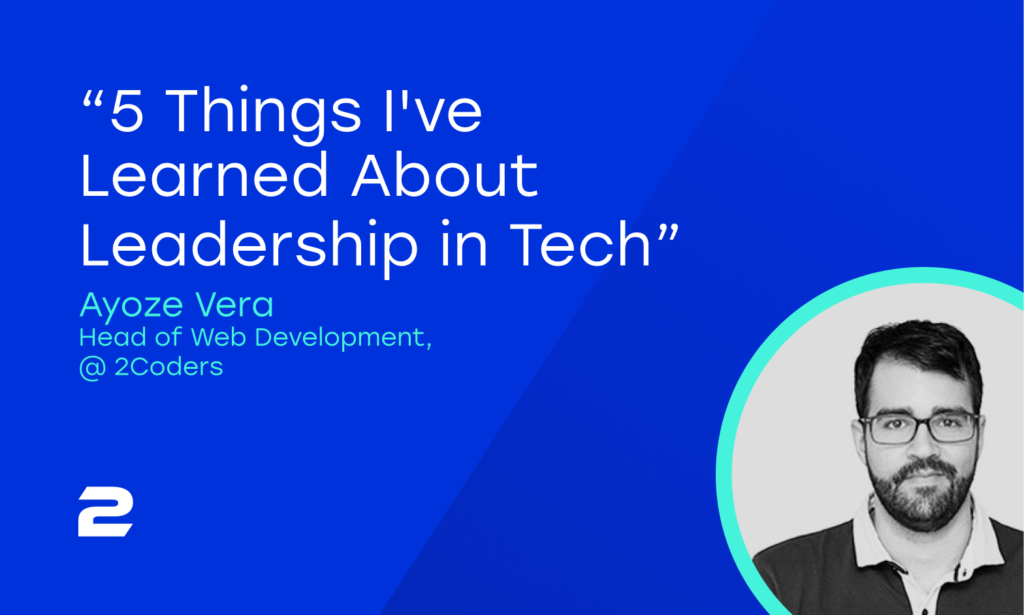
Tech leadership is all about the competence to supervise and guide a team of experts while making tough decisions on your feet related to engineering and software development. It entails overseeing and leading the process of developing complex technological solutions while at the same time motivating the entire team to perform to the best of their abilities. The two most important aspects of tech leadership are skills and personality traits. The former, which includes both technical and management skills, has to do with knowledge and experience in the field, and the latter comes as a result of your life experiences, habits, self-awareness, emotional intelligence, and constantly working on improving oneself. Bright tech leads learn independently through study and the actual work they do, but they also learn from their fellow team members. With proper support from the company, tech leads should be able to focus on improving their tech skills and inspiring others, instead of being overwhelmed with administrative work. We asked Ayoze Vera, our head of web development, to share the top 5 things he learned about tech leadership in the past 7 years of working in the tech industry and leading our team of developers at 2Coders. 💙 I would say that the most important skill of being an effective technical lead is ensuring that your team understands what they are doing, and why are they doing it. This is 50% of the job. Another important thing is having experience. Not only in the tech realm but also in business and project management. The mix of these 3-types of knowledge combined helps you detect future issues and react to them before they become a problem. It gives you ownership of the project and with it comes the responsibility, but if you ask me, that’s kind of amazing. Another key skill (which I am still working on :D) is communication. For me, this role is not only about leading, but it is also about mentoring, and for being a great mentor to your team, good communication skills are a must. What I have learned after becoming a tech lead is that I have to split my time into three units: Team developers, especially beginners, require dedicated attention and coaching, and it is your responsibility as a leader to give them the proper guidance and make sure they understand properly both the problem and the solution. Mantaining a balance between the urgent tasks and the important ones is key. When deadlines come closer, the team tends to stress more and just focus on the urgent tickets while missing the important ones. As a lead, I have to detect this and guide the team to maintain a balance between urgent tasks and important ones. Managing several projects at the same time, sometimes I am more focused on reviewing tickets and pulling requests, and it’s easy to lose control… that’s why it is of crucial importance to keep a “bird’s eye view” on the entire strategy. To motivate my team to stay on track and be more productive under an earlier deadline I would call for a meeting with all of them, get clear on the objectives and the tactics to execute, and then would split tickets and responsibilities between my fellow colleagues. Being both, a leader and a developer gives me the chance to better support my team and work alongside them. And since I love programming, it’s a pleasure to roll up my sleeves and code with them under pressure. Task estimation is an art in itself, and it’s something that can easily vary depending on the requirements and their changes. One of the best decisions we made at 2Coders was moving from closed budgets to more flexible ones. Mixing flexible budgets and agile methodologies let us adapt much better to the client’s requirements, and also the client is able to check, validate or even use the solution at an earlier stage, letting them check and decide if the solution they asked for is the correct one. This approach saves a lot of development work, and also a lot of money for our clients. It’s a win-win situation! Staying up to date with the latest trends in tech is a must” I am a little bit of a freak when it comes to new trends in the tech environment. While working, I usually listen to some programing or technological podcasts in the background, or even at home! I love discovering technology-specific evangelist streams. In my opinion, it is not necessary to dig deeper into every next tech thing you find out about, but it is quite important to have a broad understanding of the spectrum of different kinds of tech solutions on the market, the best practices in coding and the new ways of implementing them so if you ever need any of them at any time, at least you know they exist.
Top 4 Benefits of Agile Methodology in Software & Mobile App Development

Here at 2Coders, we have years of experience applying agile methodologies. During the many projects we had the opportunity to work on, we got pretty good at optimizing our developing process using the Agile methodology. Enjoying all the benefits of Agile, we felt inspired to share our experience with the community and spread the knowledge gathered. We owe you that much. Let’s begin. 1. Fast Delivery of New Product Features and Product Release The first significant benefit of the agile approach to software development is the rapid delivery of new product features and faster product release. This is all thanks to improved team collaboration. The software sector has a fast-moving marketplace and you can be easily outrun by your competitor when developing a brand new app feature. “Luckily, the agile model enables our development team at 2Coders to follow a single product roadmap effectively, build time-critical apps and be at the forefront of shifts in the competitive software landscape.” – Ayoze Vera, Head Web Developer @ 2Coders A product roadmap is a plan of actionable steps for how a product or feature will evolve over time. The product owner and the Agile project manager use the same roadmap to outline product functionality and decide on when new features will be released. This in turn provides crucial context for the team’s everyday work as it helps them prioritize features that provide the biggest impact and value for the company. Aligned on the same roadmap, agile project teams can build time-critical applications and be the first to respond to shifts in the competitive landscape. “Using Agile frameworks, complex projects can be broken down into sprints, where the first sprint only includes the most simple version of the feature. With rapid cycles of daily testing, a new feature is ready (in its simplest form), after only a one to four weeks sprint.” – Marija Lukaroska, Android Developer @ 2Coders 2. Client Collaboration for Success “Oftentimes, you build something exactly as per requirements, but it turns out that’s not what business stakeholders wanted. Instead of finding that out six months after the project started, scrum helps you avoid that by providing something tangible to show users by the end of the first sprint. Then you get feedback and continue to iterate until you build something everyone is happy with.” – Alexander Kharlamov, Engineer @ Yieldstreet The most common project pitfalls occur when software development teams don’t keep their clients involved in the development cycle. The agile project manager has regular meetings with their customer to keep them informed on project deliverables and ask for sprint review. This way, we demonstrate our appreciation for the client’s input by incorporating them in the development process and staying aligned on business goals. “Stakeholders want to be involved throughout the entire project so that they may provide valuable feedback and ensure that the final result meets their requirements.” – Karen Monzón, Account Manager @ 2Coders These customized deliverables provide continuous attention to the software quality, enhance customer satisfaction and increase client retention. There is one more thing when it comes to optimizing for customer satisfaction — user stories. Remember, you’re creating the software or mobile app not only for your customer’s business but also for their customers – the end-users of your tech solution. Involving users in beta testing at the early stages of a feature launch gives us constructive insights that can be implemented into the upcoming sprint. “By monitoring user interactions with the new app, every subsequent sprint can be focused on enhancing and developing the new feature to its maximum potential with the obtained feedback.” – Eliza Tymczuk, UX – UI Designer @ 2Coders 3. Continuous Enhancement and Quality Assurance That is the road to software development and mobile app design with user experience in mind. Agile methodology strives towards an iterative approach to project management — taking a series of repeatable steps while tweaking and improving the product with each cycle. This focus on continuous improvement and quality control is one of the core activities of Agile teams, and it helps them create superior and quality products. “In Agile project management methodologies, testing is an integrated part of our project execution phase. Which means that the overall quality of the final product is greater!” – Nenad Vuchkovikj, React Developer @ 2Coders The client remains involved in the software development project and can ask for requirement analysis and quality assurance. Since one of the core principles of Agile is continuous integration through an iterative process, a self-managing team keeps working on improving functionalities according to customers feedback. Being iterative, another of the key benefits of the agile process is the ability to find problems and fix them quickly and efficiently. The flexibility of the agile development model allows the entire team to respond to customer reaction and constantly improve the product in incremental releases. 4. Increased Flexibility, Better Control & Risk Reduction A fourth amazing benefit of the agile development process is that it is flexible and has an innovative approach. It keeps you on your toes! The plan is not a fixed document that is blindly followed, but a flexible framework that allows us to iterate, try things out, and then gradually evolve and improve your product’s features. “Agile helps us keep an eye on the bigger picture and be flexible about the constant changes in the industry and marketplace. It also enables our mobile devs to identify and fix errors early in the development process. This not only results in superior mobile app features but also prevents our clients from wasting both time and money.” – Coral Vázquez, Chief Sales Officer @ 2Coders When Agile is properly implemented in a development team, teams operate in shorter bursts, with the stakeholder providing frequent feedback and interaction, reducing the risk of misunderstanding between both parties. Changes are typically time-consuming and costly in other project management approaches, but not with Agile. One of the main reasons why dynamic companies employ Agile in their projects is because of
The Complete Guide to App UX Design Process When Developing a New Mobile App
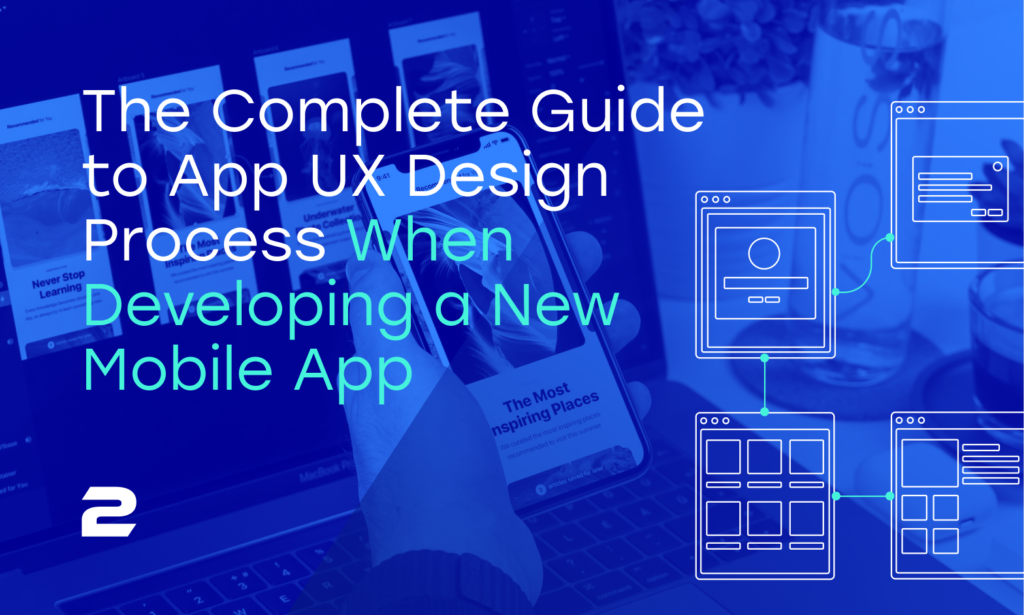
In the recent past, the UK Daily Mail reported a ‘record-breaking’ trend as individuals increasingly adopt a mobile lifestyle. The findings from the same study revealed that, on average, people now spend more than 4.8 hours a day on their mobile apps. Or in other words, 88% of mobile time is spent on apps. Having said that, it’s obvious that the mobile app industry is thriving without any signs of slowing down in the foreseeable future. As a result, more and more businesses are embracing the power of mobile apps to better serve their customers straight from their favorite gadget – the smartphone. For many businesses, having a mobile app it’s no longer an option, but a necessity. While this is encouraging news for anyone who plans on developing an app, it’s not that easy. And in order to be successful in this space, two other events need to happen. And that is next to impossible without a flawless UX design process. Thousands of new mobile apps go live every day on app stores, propelled by the high demand for new content and functionality. But that high volume equals= lots of competition, which makes it way more difficult even for “good” apps to make an impact. As a matter of fact, according to Gartner, less than 0.01 percent of all consumer mobile apps are considered successful in terms of producing revenue. So, if you’re thinking about building a brand new mobile app for your business, it’s key that you make it as user-friendly as possible. And that’s why today we’re going to talk about user experience (UX) when building an app. What is App UX Design and why is it so important in the mobile app development process? UX design is all about making the user’s experience with the product the best it can be and is one of the most important stages of the mobile app development process. How your app works and looks is the ultimate, determining factor in whether your customers will use it and continue to do so in a highly competitive market. To attract users’ attention and maintain their loyalty, the UX of your mobile app must constantly prove its value. You should always strive to simplify usage and navigation, create more meaningful and contextual experiences, and solve each challenge that comes along the way. Focusing on these qualities is what differentiates good from great mobile app UX design. In writing this article we worked closely with Eliza, our chief UX/UI designer, to make sure it is filled with real-life experience and expert knowledge on the subject and gives you actionable takeaways. “The most important aspect of UX design is to be laser-focused on the end-user. During the app UX design process, you must have clarity about what your target users want to achieve and how your app can best help them in doing so. But this is more difficult than it sounds because we’re instinctively prone to bias. When processing information, our brain naturally creates mental shortcuts. These shortcuts reduce the cognitive load for our brain, so every time it must process new information, it simply uses existing shortcuts to do it faster. It’s easy to think of cognitive biases as something that helps us make sense of the world. However, this “feature” can cause many problems because, under certain circumstances, mental shortcuts can easily lead us to incorrect assumptions.Being crystal clear of your users’ needs is one of the most important aspects of app UX design and maintaining your focus in that direction is crucial.” Having a solid UX design process will help you bridge this gap and give you a better chance of creating a product with great value and usability. Actually, a well-defined and well-executed UX design process is what makes it possible to craft amazing experiences for mobile app users. Before developing a new mobile app, you need to design it first. Visual design is how your mobile app looks, but UX design is, essentially, how it feels. The UX design starts much more before the coding process. All the information that we receive from a client, plus our additional research is a part of the UX stage. When we have collected all the insights we need to start creating an app, we start with a sketch of the product, and then it converts to a low-fidelity prototype. The next step is a high-fidelity prototype when we make the product visually attractive. After all these stages are successfully completed, the product is handed over to the developers to build it. The process will depend on the type of product we are designing. Different projects require different approaches. It’s a long process, but each step is so important to reach the perfect product for your client. Here is what my UX design process usually looks like: Empathize In the first stage, we talk with the client to understand what key business goal they strive to achieve, what is the Minimum Viable Product they want to create, and the overall context of the project as well. MVP is defined as the product with the minimum features for validating and learning purposes. In this phase, we brainstorm with the client on the highest level to have a concept of the product. Product research Once we have completed this phase we start to conduct our research and brainstorm our ideas. Target audience and competitor’s research depth can vary depending on the project and how long it lasts, but we have to know everything about the market and the options that exist. This phase can really help save time and money down the road. Define In this phase, we focus on the user and we confirm that the team’s most important assumptions are correct. To confirm this information we use tools like pain points, user personas, user stories, or user journeys. Ideate This phase already incorporates UX and UI design. In the beginning, we make wireframes of the workflows to be sure that all the
How OTT Platforms have Helped Businesses Thrive in These Top 5 Industries

We witnessed advancements in technology in almost every industry after the lockdown. But still, some industries were severely impacted while other industries thrived. The interesting thing is that many of them were able to improve their profits thanks to the OTT platforms and custom apps. Artificial intelligence and blockchain are revolutionizing the world’s OTT platforms. Video-on-demand and replays are available for games that can be streamed live with little delay. Sports is another excellent illustration of how OTT apps affect the media industry. So we believe it’s only fair to say something on the topic. How OTT platforms have helped businesses thrive in these top 5 industries? #1. Media and Entertainment The appearance of OTT platforms has disrupted the entertainment sector as it made access to media content more convenient and user-friendly. With social distancing being the new norm, the theatres & cinemas being closed, and concerts forbidden, people confined in their homes were left with very few options for entertainment. Luckily, the OTT platforms were already here and they played a major role in entertaining people amidst these critical times, taking over all the other channels of entertainment. Тhe businesses that thrived were those that assessed the situation wisely and took advantage of OTT app platforms to distribute content and reach a wider audience. Movies, podcasts, radio bulletins, talk shows, sports, and even news bulletins can be accessed on an OTT app platform. Today, consumers prefer access to content that is personalized and flexible. Right when we want it and no matter where we are. Accessible on a laptop, smartphone, tablet, smart TV, and more. In 2010 Netflix had just started stepping its toes into the international waters, and today Netflix is available for streaming in over 190 countries, its revenue reaching approximately 30 billion U.S. dollars in 2021. In 2010, few OTT platforms entered the Indian scene and showcased content that was already being aired on National televisions. A similar setup can be worked out for news channels and entertainment services to make sure that content, traditionally broadcasted on the TV or the radio, can instead be accessed through an over-the-top application. a) Television 📺 Consider the news media on television. This content is broadcasted through cables/satellite, which the viewers can access at the scheduled time only. World News, recaps, documentaries, special coverages, discussions on social/political topics, all of it can be watched at a scheduled time on TV. It is the same for live content, such as breaking news, interviews, big announcements, talk shows, etc. As our appetite for comfort is reaching new heights, the news media has to come up with OTT apps that will enable their audience to watch their TV content, anytime, anywhere. Over-the-Top (OTT) apps for mobile or tablets give you that flexibility. Additionally, internet streaming makes the content available on-demand – you can watch it at any point in time. An example of News streaming OTT platform is Sky News. It is a British free-to-air television news channel that has developed streaming apps for mobile (Android & iOS), XBOX, Apple TV, ROKU, and the web. ZEE5 is another example, streaming all the Zee Network content, including shows, movies, and even news! b) Audio Streaming 🎧 Audio is another important OTT industry, with sites like Spotify becoming nearly synonymous with music streaming. Through an internet connection, users can access a vast library of recorded artists and podcasts. Spotify offers a massive music library and creates tailored playlists based on the user’s preferences and activities. Music streaming apps have become a practical monetization model for independent music artists which offers them easy access to connect with their fans and audience using online tools and evaluates their returns on investment. Due to low costs as compared to releasing songs via other types of mediums the industry has seen a growth of 150% adding up new and independent artists in the past year. Audio OTT platforms have also brought about a change in our listening habits and how we discover new music to listen to. By offering independent artists a stage, audio OTT platforms have influenced the future of music placing the reigns directly in the hands of creators. Because they are user-friendly, audio OTTs no longer only represent millennials and Gen Z, as one might expect, but also include an influx of millions of new users of all ages. This enables creators to connect with a diverse audience and promote their content to people of all ages. The sheer variety and convenience of content consumption could be the primary drivers of this boom. Several key initiatives to entertain users and promote artists can be explained by specifically designed playlists by emerging artists and the promotion of podcasts that are popular across all platforms, even if hosted by a new host. Another significant initiative by audio OTT has been the addition of live streaming to the app, where artists can host virtual performances/live jam sessions and directly engage with their audience, thereby creating and expanding their fan base. Over the last year, the industry has witnessed more than 150 live performances on audio OTT by both national and international artists. c) Video Streaming 📽️ In the entertainment industry, video-on-demand and live streaming services are gaining traction. OTT platforms such as Hotstar, Amazon Prime, and Netflix saw an 82.63 percent increase in time spent during the COVID-19 lockdown in India. These video streaming platforms have become a popular source of entertainment, as evidenced by the increase in time spent on them. These popular video streaming platforms can be accessed via mobile apps, TV apps, XBOX, Playstation, Chromecast, Blu-ray players, and other devices. #2. Sports ⚽🏀 A few years back, the only way people could watch their favorite sports matches was through cable or DTH, on TV. Which is not always practical nor convenient. Imagine missing Ronaldo’s epic goal because you had to go to the toilet. You no longer have to miss anything thanks to the launch of well-known OTT streaming services! You can watch various