2Coders Studio

Top 4 Benefits of Agile Methodology in Software & Mobile App Development

Here at 2Coders, we have years of experience applying agile methodologies. During the many projects we had the opportunity to work on, we got pretty good at optimizing our developing process using the Agile methodology. Enjoying all the benefits of Agile, we felt inspired to share our experience with the community and spread the knowledge gathered. We owe you that much. Let’s begin. 1. Fast Delivery of New Product Features and Product Release The first significant benefit of the agile approach to software development is the rapid delivery of new product features and faster product release. This is all thanks to improved team collaboration. The software sector has a fast-moving marketplace and you can be easily outrun by your competitor when developing a brand new app feature. “Luckily, the agile model enables our development team at 2Coders to follow a single product roadmap effectively, build time-critical apps and be at the forefront of shifts in the competitive software landscape.” – Ayoze Vera, Head Web Developer @ 2Coders A product roadmap is a plan of actionable steps for how a product or feature will evolve over time. The product owner and the Agile project manager use the same roadmap to outline product functionality and decide on when new features will be released. This in turn provides crucial context for the team’s everyday work as it helps them prioritize features that provide the biggest impact and value for the company. Aligned on the same roadmap, agile project teams can build time-critical applications and be the first to respond to shifts in the competitive landscape. “Using Agile frameworks, complex projects can be broken down into sprints, where the first sprint only includes the most simple version of the feature. With rapid cycles of daily testing, a new feature is ready (in its simplest form), after only a one to four weeks sprint.” – Marija Lukaroska, Android Developer @ 2Coders  2. Client Collaboration for Success “Oftentimes, you build something exactly as per requirements, but it turns out that’s not what business stakeholders wanted. Instead of finding that out six months after the project started, scrum helps you avoid that by providing something tangible to show users by the end of the first sprint. Then you get feedback and continue to iterate until you build something everyone is happy with.”  – Alexander Kharlamov, Engineer @ Yieldstreet The most common project pitfalls occur when software development teams don’t keep their clients involved in the development cycle. The agile project manager has regular meetings with their customer to keep them informed on project deliverables and ask for sprint review.  This way, we demonstrate our appreciation for the client’s input by incorporating them in the development process and staying aligned on business goals. “Stakeholders want to be involved throughout the entire project so that they may provide valuable feedback and ensure that the final result meets their requirements.” – Karen Monzón, Account Manager @ 2Coders These customized deliverables provide continuous attention to the software quality, enhance customer satisfaction and increase client retention. There is one more thing when it comes to optimizing for customer satisfaction — user stories. Remember, you’re creating the software or mobile app not only for your customer’s business but also for their customers – the end-users of your tech solution. Involving users in beta testing at the early stages of a feature launch gives us constructive insights that can be implemented into the upcoming sprint. “By monitoring user interactions with the new app, every subsequent sprint can be focused on enhancing and developing the new feature to its maximum potential with the obtained feedback.” – Eliza Tymczuk, UX – UI Designer @ 2Coders 3. Continuous Enhancement and Quality Assurance That is the road to software development and mobile app design with user experience in mind. Agile methodology strives towards an iterative approach to project management — taking a series of repeatable steps while tweaking and improving the product with each cycle. This focus on continuous improvement and quality control is one of the core activities of Agile teams, and it helps them create superior and quality products. “In Agile project management methodologies, testing is an integrated part of our project execution phase. Which means that the overall quality of the final product is greater!” – Nenad Vuchkovikj, React Developer @ 2Coders The client remains involved in the software development project and can ask for requirement analysis and quality assurance. Since one of the core principles of Agile is continuous integration through an iterative process, a self-managing team keeps working on improving functionalities according to customers feedback. Being iterative, another of the key benefits of the agile process is the ability to find problems and fix them quickly and efficiently. The flexibility of the agile development model allows the entire team to respond to customer reaction and constantly improve the product in incremental releases. 4. Increased Flexibility, Better Control & Risk Reduction A fourth amazing benefit of the agile development process is that it is flexible and has an innovative approach. It keeps you on your toes! The plan is not a fixed document that is blindly followed, but a flexible framework that allows us to iterate, try things out, and then gradually evolve and improve your product’s features. “Agile helps us keep an eye on the bigger picture and be flexible about the constant changes in the industry and marketplace. It also enables our mobile devs to identify and fix errors early in the development process. This not only results in superior mobile app features but also prevents our clients from wasting both time and money.” – Coral Vázquez, Chief Sales Officer @ 2Coders When Agile is properly implemented in a development team, teams operate in shorter bursts, with the stakeholder providing frequent feedback and interaction, reducing the risk of misunderstanding between both parties.  Changes are typically time-consuming and costly in other project management approaches, but not with Agile. One of the main reasons why dynamic companies employ Agile in their projects is because of

The Complete Guide to App UX Design Process When Developing a New Mobile App

In the recent past, the UK Daily Mail reported a ‘record-breaking’ trend as individuals increasingly adopt a mobile lifestyle. The findings from the same study revealed that, on average, people now spend more than 4.8 hours a day on their mobile apps. Or in other words, 88% of mobile time is spent on apps. Having said that, it’s obvious that the mobile app industry is thriving without any signs of slowing down in the foreseeable future. As a result, more and more businesses are embracing the power of mobile apps to better serve their customers straight from their favorite gadget – the smartphone. For many businesses, having a mobile app it’s no longer an option, but a necessity. While this is encouraging news for anyone who plans on developing an app, it’s not that easy. And in order to be successful in this space, two other events need to happen. And that is next to impossible without a flawless UX design process.  Thousands of new mobile apps go live every day on app stores, propelled by the high demand for new content and functionality. But that high volume equals= lots of competition, which makes it way more difficult even for “good” apps to make an impact. As a matter of fact, according to Gartner, less than 0.01 percent of all consumer mobile apps are considered successful in terms of producing revenue.  So, if you’re thinking about building a brand new mobile app for your business, it’s key that you make it as user-friendly as possible. And that’s why today we’re going to talk about user experience (UX) when building an app. What is App UX Design and why is it so important in the mobile app development process? UX design is all about making the user’s experience with the product the best it can be and is one of the most important stages of the mobile app development process.  How your app works and looks is the ultimate, determining factor in whether your customers will use it and continue to do so in a highly competitive market. To attract users’ attention and maintain their loyalty, the UX of your mobile app must constantly prove its value. You should always strive to simplify usage and navigation, create more meaningful and contextual experiences, and solve each challenge that comes along the way.  Focusing on these qualities is what differentiates good from great mobile app UX design. In writing this article we worked closely with Eliza, our chief UX/UI designer, to make sure it is filled with real-life experience and expert knowledge on the subject and gives you actionable takeaways. “The most important aspect of UX design is to be laser-focused on the end-user. During the app UX design process, you must have clarity about what your target users want to achieve and how your app can best help them in doing so. But this is more difficult than it sounds because we’re instinctively prone to bias. When processing information, our brain naturally creates mental shortcuts. These shortcuts reduce the cognitive load for our brain, so every time it must process new information, it simply uses existing shortcuts to do it faster. It’s easy to think of cognitive biases as something that helps us make sense of the world. However, this “feature” can cause many problems because, under certain circumstances, mental shortcuts can easily lead us to incorrect assumptions.Being crystal clear of your users’ needs is one of the most important aspects of app UX design and maintaining your focus in that direction is crucial.” Having a solid UX design process will help you bridge this gap and give you a better chance of creating a product with great value and usability. Actually, a well-defined and well-executed UX design process is what makes it possible to craft amazing experiences for mobile app users. Before developing a new mobile app, you need to design it first. Visual design is how your mobile app looks, but UX design is, essentially, how it feels. The UX design starts much more before the coding process. All the information that we receive from a client, plus our additional research is a part of the UX stage.  When we have collected all the insights we need to start creating an app, we start with a sketch of the product, and then it converts to a low-fidelity prototype.  The next step is a high-fidelity prototype when we make the product visually attractive. After all these stages are successfully completed, the product is handed over to the developers to build it. The process will depend on the type of product we are designing. Different projects require different approaches. It’s a long process, but each step is so important to reach the perfect product for your client.  Here is what my UX design process usually looks like: Empathize In the first stage, we talk with the client to understand what key business goal they strive to achieve, what is the Minimum Viable Product they want to create, and the overall context of the project as well. MVP is defined as the product with the minimum features for validating and learning purposes. In this phase, we brainstorm with the client on the highest level to have a concept of the product. Product research Once we have completed this phase we start to conduct our research and brainstorm our ideas. Target audience and competitor’s research depth can vary depending on the project and how long it lasts, but we have to know everything about the market and the options that exist. This phase can really help save time and money down the road. Define In this phase, we focus on the user and we confirm that the team’s most important assumptions are correct. To confirm this information we use tools like pain points, user personas, user stories, or user journeys. Ideate This phase already incorporates UX and UI design. In the beginning, we make wireframes of the workflows to be sure that all the

What is a White-label OTT Platform and How it Can Benefit Your Business

With the rise of the Video On Demand (VOD) platforms, people across the globe started switching from traditional TV to consuming content on all their devices using a video streaming platform. This has enormously impacted the demand for the VOD and OTT market. And it only makes sense because these platforms are the next evolutionary step in how we prefer to consume media.  The new solutions – such as white label OTT platforms, are built with the user in mind, therefore are more user friendly and solve most of the challenges and limitations we had with the traditional way of consuming the same content.  Let’s take Netflix for example. Why would anybody wait until a certain period of time in the day, decided upfront by FoxLife (or any TV channel for that matter), to watch their favorite TV show – when the same show is readily available on Netflix? Whenever you want, and on any device you prefer. All you need to have is an internet connection and pay a monthly subscription fee. Some OTT platforms are free, such as Fifa+.  The OTT platforms are simply the next step in the technological evolution regarding how we consume video or audio content, and it shows. Take a look at the statistics.  The Scope of the OTT Sector & Opportunities 📌The video-on-demand industry was valued at 55 billion dollars in 2019 and is expected to expand at a 15 percent compound annual growth rate (CAGR) from 2020 to 2027. By 2025, user penetration will have increased to 28.5 percent from 23.9 percent in 2021. 📌Since January 2021, the number of OTT video users worldwide stood at 2.28 billion, with penetration rates As of January 2021, the number of OTT video users worldwide stood at 2.28 billion, with penetration rates surging in countries like the United Kingdom, Canada, and the United States. 📈 The largest segment is Video Streaming (SVoD) with a market volume of US$82.43bn in 2022. Subscription Video-on-Demand (SVoD) allows its users to stream unlimited digital video content at a fixed monthly rate. In 2019, global consumer spending on SVoD services amounted to 53.34 billion U.S. dollars, a figure that is projected to double within the next five years. In this article, we will discuss the prime aspects of owning a white-label streaming service and how to choose the right features when creating one for your business. What do we mean when we say White Label Streaming Service? In simple terms, a white-label streaming service makes use of a custom-built video or audio player that primarily reflects your brand and is specifically tailored to suit your customer’s needs. This allows you to grow independently as a business rather than relying on any third-party platform. In the streaming world, a white-label video hosting platform allows content to be broadcast to the users without any links or logos pointing back to the provider’s page. There are user-friendly VOD and white-label streaming platforms with more advanced integrations that don’t require any technical knowledge on your part. White-label players are assisting more content creators and broadcasters in promoting their video content online. What Is A White-Label OTT Platform? A white-label OTT platform is a ready-to-use solution (pre-made) that can be customized and launched quickly. The platform comes with many user-friendly features and is built on top of a cutting-edge technology stack. Most importantly, a white-label OTT platform may be tailored to meet specific business requirements, aligned with the unique selling proposition of the business, thus making it stand out among competitors.  The traditional method is to create a video streaming app from the ground up. This is also an option, but it has its own cons. It’s a more time-consuming task for the developers and will demand a significant contribution from your part in the process of making it. On the other hand, you might consider using a ready-made OTT app that is a cost-effective solution, can be launched quickly, and can be easily customized to suit your unique needs. The Devs team at 2Coders created a white-label OTT solution in-house We built an in-house OTT front-end app that can be readily customized to each client’s needs, for a variety of platforms. We integrated a set of features that would allow our clients to reach millions of new visitors with their content in a cost-effective and timely manner. UI customization, intuitive navigation, rebranding capabilities, and device consistency are just a few of these features. Listening to our clients, we recognized the need for an easily adjustable OTT application for many platforms, where everything could be dynamic, from the graphics to the page setup. One of the most difficult tasks was to make it possible to adjust the distribution of UI components from the server without having to re-deploy the app on the devices. From ideation to realization: here’s how the development process went, straight from 2Coders laboratory 🧪 (Quick interview with our developers) Hristijan: For me, it was the need to create a custom spatial navigation library. Nenad: The main challenge I faced was building the custom video player commands and the carousel spatial navigation. Hristijan: The library we were using didn’t cover all the possible scenarios that we needed for our app. That’s why I started developing a custom one. Now our library includes more features, allowing us to handle multiple scenarios with different approaches. For now, the entire library is written in React with functional components, but the plan is to rewrite it with Typescript, making it more robust. Nenad: I had some difficulty with the remote control buttons for the video player on Samsung TV. After reading the Tizen documentation I realized that I just had to register the button keys prior to using them. Hristijan: The installation for Tizen was pretty challenging and it took me almost the entire day to make the build for the application. So, I am most proud of the Samsung TV. Nenad: Samsung TV, because it was more difficult than the LG. Hristijan: If I

How OTT Platforms have Helped Businesses Thrive in These Top 5 Industries

We witnessed advancements in technology in almost every industry after the lockdown. But still, some industries were severely impacted while other industries thrived. The interesting thing is that many of them were able to improve their profits thanks to the OTT platforms and custom apps. Artificial intelligence and blockchain are revolutionizing the world’s OTT platforms. Video-on-demand and replays are available for games that can be streamed live with little delay. Sports is another excellent illustration of how OTT apps affect the media industry. So we believe it’s only fair to say something on the topic. How OTT platforms have helped businesses thrive in these top 5 industries? #1. Media and Entertainment The appearance of OTT platforms has disrupted the entertainment sector as it made access to media content more convenient and user-friendly. With social distancing being the new norm, the theatres & cinemas being closed, and concerts forbidden, people confined in their homes were left with very few options for entertainment.  Luckily, the OTT platforms were already here and they played a major role in entertaining people amidst these critical times, taking over all the other channels of entertainment. Тhe businesses that thrived were those that assessed the situation wisely and took advantage of OTT app platforms to distribute content and reach a wider audience. Movies, podcasts, radio bulletins, talk shows, sports, and even news bulletins can be accessed on an OTT app platform. Today, consumers prefer access to content that is personalized and flexible. Right when we want it and no matter where we are. Accessible on a laptop, smartphone, tablet, smart TV, and more.  In 2010 Netflix had just started stepping its toes into the international waters, and today Netflix is available for streaming in over 190 countries, its revenue reaching approximately 30 billion U.S. dollars in 2021. In 2010, few OTT platforms entered the Indian scene and showcased content that was already being aired on National televisions. A similar setup can be worked out for news channels and entertainment services to make sure that content, traditionally broadcasted on the TV or the radio, can instead be accessed through an over-the-top application. a) Television 📺 Consider the news media on television. This content is broadcasted through cables/satellite, which the viewers can access at the scheduled time only. World News, recaps, documentaries, special coverages, discussions on social/political topics, all of it can be watched at a scheduled time on TV. It is the same for live content, such as breaking news, interviews, big announcements, talk shows, etc. As our appetite for comfort is reaching new heights, the news media has to come up with OTT apps that will enable their audience to watch their TV content, anytime, anywhere. Over-the-Top (OTT) apps for mobile or tablets give you that flexibility. Additionally, internet streaming makes the content available on-demand – you can watch it at any point in time.  An example of News streaming OTT platform is Sky News. It is a British free-to-air television news channel that has developed streaming apps for mobile (Android & iOS), XBOX, Apple TV, ROKU, and the web. ZEE5 is another example, streaming all the Zee Network content, including shows, movies, and even news! b) Audio Streaming 🎧 Audio is another important OTT industry, with sites like Spotify becoming nearly synonymous with music streaming. Through an internet connection, users can access a vast library of recorded artists and podcasts. Spotify offers a massive music library and creates tailored playlists based on the user’s preferences and activities. Music streaming apps have become a practical monetization model for independent music artists which offers them easy access to connect with their fans and audience using online tools and evaluates their returns on investment. Due to low costs as compared to releasing songs via other types of mediums the industry has seen a growth of 150% adding up new and independent artists in the past year. Audio OTT platforms have also brought about a change in our listening habits and how we discover new music to listen to. By offering independent artists a stage, audio OTT platforms have influenced the future of music placing the reigns directly in the hands of creators. Because they are user-friendly, audio OTTs no longer only represent millennials and Gen Z, as one might expect, but also include an influx of millions of new users of all ages. This enables creators to connect with a diverse audience and promote their content to people of all ages. The sheer variety and convenience of content consumption could be the primary drivers of this boom. Several key initiatives to entertain users and promote artists can be explained by specifically designed playlists by emerging artists and the promotion of podcasts that are popular across all platforms, even if hosted by a new host. Another significant initiative by audio OTT has been the addition of live streaming to the app, where artists can host virtual performances/live jam sessions and directly engage with their audience, thereby creating and expanding their fan base. Over the last year, the industry has witnessed more than 150 live performances on audio OTT by both national and international artists. c) Video Streaming 📽️ In the entertainment industry, video-on-demand and live streaming services are gaining traction. OTT platforms such as Hotstar, Amazon Prime, and Netflix saw an 82.63 percent increase in time spent during the COVID-19 lockdown in India. These video streaming platforms have become a popular source of entertainment, as evidenced by the increase in time spent on them. These popular video streaming platforms can be accessed via mobile apps, TV apps, XBOX, Playstation, Chromecast, Blu-ray players, and other devices. #2. Sports ⚽🏀 A few years back, the only way people could watch their favorite sports matches was through cable or DTH, on TV. Which is not always practical nor convenient. Imagine missing Ronaldo’s epic goal because you had to go to the toilet. You no longer have to miss anything thanks to the launch of well-known OTT streaming services! You can watch various

Is OTT the future? 8 Over-The-Top Trends to Watch for in Streaming
The OTT industry is blooming. With its worth of $121.61 billion in 2019, the OTT market is expected to grow to $1.039 trillion by 2027. (source Uscreen) Before we jump into the OTT Video streaming trends for 2022 and beyond, let’s define what we mean when we say OTT and why is OTT relevant today? What does OTT mean? Over-The-Top (OTT) is the process of streaming media content to viewers and customers directly over the internet (on the web), without paying for cable TV.  It’s the modern way to access media content like movies, TV shows, series, sports, music, etc, across different devices, whenever we want! Streaming the content “over-the-top” (across different devices) is the new delivery method for providing film and TV content over the internet without the need for traditional broadcast, cable, or satellite pay-TV providers. And people love it!  Viewers can access their favorite programs and movies through an app or a website straight from their fave tech gadgets: smartphones, tablets, laptops, smart TVs, gaming consoles, computers, and such, whenever they’re connected to the internet and paying for access to an OTT platform. The most popular mobile operating system across all markets is Android with 72.2% market share, followed by iOS with 26.66% (GlobalStats StatCounter). Globally, there are 3.8 million smartphones, as 48.3% of the world’s population owns one. (Bank my Cell) This means they have the freedom to choose when and what type of content they want to consume. Which beats traditional TV more and more with each passing day.  Typically, OTT streaming services limit access to paying viewers. They provide premium content and a superior experience for which viewers can pay to access on a pay-per-view basis, or they can subscribe for unlimited on-demand access to the platform for a monthly or annual subscription. What is an OTT platform? & Examples Take Netflix for example. Netflix is an example of an OTT platform for streaming service that offers a wide variety of award-winning TV shows, movies, anime, documentaries, and more.  And the best part is, you can watch Netflix movies & TV shows online OR stream them right on your smart TV, game console, PC, Mac, mobile, tablet, and more. Whenever you want to watch, as long as you have access to Netflix and the internet.  Netflix is the biggest OTT service in the US in terms of revenue, with 30.8% of all subscription revenues heading their way. (eMarketer) By March 2020, 61% of Americans either paid for or shared a password for a Netflix account. How many OTT platforms are there? Other OTT platform examples are Disney+, Hulu, Amazon Prime Video, Peacock, CuriosityStream, Hotstar, Discovery+, Pluto TV, and so many more! as new OTT platforms are being created while you’re reading this. The list of streaming media services is expanding. Fun fact: The Mandalorian was the most-watched Disney+ series of 2020, with 14.5 million streaming minutes over the year! (Nielsen) Here are the Top 8 Over-The-Top Trends to Watch for in 2022 #1. OTT industry will continue to expand As we mentioned earlier, The Over the Top (OTT) Market was valued at USD 101.42 Billion in 2020, and it is expected to reach USD 223.07 Billion by 2026, registering a CAGR of 13.87%, during the period of 2021 – 2026.  Part of this rapid growth is influenced by the COVID-19 pandemic which positively impacted the OTT market landscape, as more people switched to consuming content via OTT devices at home. This trend is here to stay as this format is expected to continue to grow, as we can see from the rising OTT subscription rate. The number of consumers is increasing as more and more people now have a digital TV in their pocket and use over-the-top media service as their go-to source of entertainment, knowledge, and content library. This presents an alluring opportunity for media buyers looking to invest in OTT streaming and take advantage of the changing consumer trends. Streaming services will dominate the market with the OTT industry as a leader. #2. Immersive OTT live streaming possibilities Live broadcasting of sports, award ceremonies, and other events on OTT platforms is a huge step forward in the transition from traditional TV.  Bootshaus Live, for example, is a video streaming platform launched by Bootshaus, one of the most popular electronic music nightclubs in Germany. They were looking for a way to connect with their audience and continue to generate income when COVID-19 restrictions forced us all home, and them to close indefinitely.  But they found their solution in the OTT industry. They created a subscription streaming service – video-on-demand (SVOD), where their most loyal audience can enjoy live streams of DJ sessions and get access to on-demand videos of exclusive DJ sets. So, it won’t be surprising if more OTT media houses and publishers experiment with this content format. What’s particularly interesting is how live broadcasting on OTT will match the cable TV experience. Virtual reality (VR) technology will make the viewing experience more immersive and entertaining. #3. 5G – A Key Driving Force behind OTT Adoption 5G is the 5th generation mobile network that aims to provide even better wireless internet with a fast and reliable connection and thus connect people with technology even further. 5G will become more popular as the year progresses. Using 5G will make it possible to live stream high-resolution videos with minimal latency (delay on a network or Internet connection). 360-degree live streaming will be more readily accessible, too! #4. Shared viewing experience Shared viewing was popularized when many of us started sharing the same account (e.g. on Netflix or HBO) to watch content. The five biggest U.S. subscription streaming video services saw increases in engagement in early May. (source Comscore). Now, they used this perk to transform it into a common option in streaming services so people can use one out of many accounts within one subscription package plus can also watch content simultaneously from different places when the subscriptions are shared among groups or

2Coders Academy in collaboration with SPEGC is officially launched!

We are excited to share with you that our first course on Developing native apps with Swift for iPhones and iPads devices is launched successfully! 🎉 This program was born with the aim of offering students the knowledge, skills, and abilities necessary for their immersion, as mobile application development professionals, in a labor market marked by the digital transformation of society. Students of this project are people who, having basic knowledge of a programming language, want to dive deeper into the development of iOS applications and upgrade their skills. By learning through practice, side by side with David Santana (one of the co-founders at 2Coders) together with Antonio Fernandez Vega and Julio Cesar Fernández, our students will acquire practical knowledge and experience to excel in their career. 🤓 Our mission is to satisfy the curiosity of our people in this field and nurture their passion for app development, as we enable more residents of Gran Canaria to get a job within the mobile application market. And for those that are already working in this sector, this is a great opportunity to develop extra skills! Including the non-technical, but necessary to work on a successful project and to understand the context of any mobile application, such as the operation of the application store, Apple guides, etc. The syllabus is governed by specific objectives so that by the end of it students can become Swift developers capable of creating applications for iOS devices. So far 16 students enrolled in our academy and are currently training on floor 1 in the Science and Technology Park of the ULPGC. This project is a collaboration with SPEGC SPEGC is a commercial entity wholly owned by the Council – Cabildo de Gran Canaria, and currently attached to the Ministry of Economic Development, Energy Sovereignty, Climate, and Knowledge. Its fundamental purpose is to provide support and investment for the creation and development of companies, behind a greater mission to promote economic and business activities that contribute to the development and expansion of Gran Canaria. You can find more information about this project here Desarrollo de apps nativas con Swift para dispositivos iPhones y iPads.

Market growth
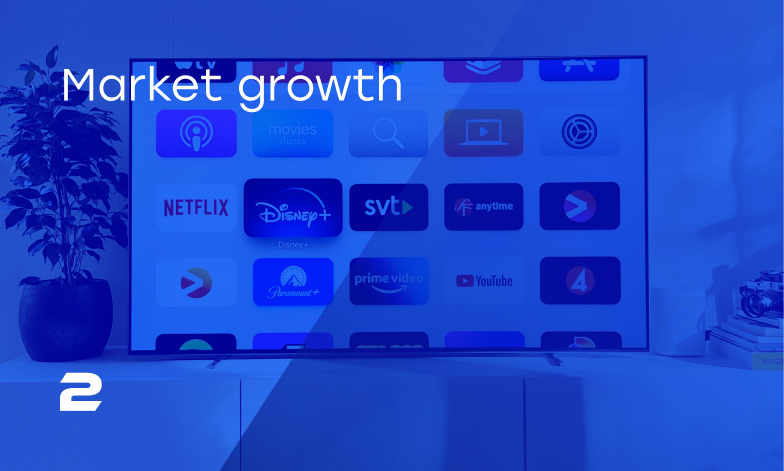
Growth in the OTT platform market, the increase in technological use on the internet and the adoption of cloud processing

Privacy Overview

This website uses cookies so that we can provide you with the best user experience possible. Cookie information is stored in your browser and performs functions such as recognising you when you return to our website and helping our team to understand which sections of the website you find most interesting and useful.